Opening Golf to the World
Introduction and Executive Summary
Water, like many other natural resources, is variable in its supply. Over the last 40-50 years, golf courses have become increasingly reliant on artificial irrigation to maintain and improve turfgrass quality. All golf courses have a duty to themselves, and to the wider environment to ensure that their water sourcing strategies are sustainable and secure for long term use.
Introduction
Water, like many other natural resources, is variable in its supply. Over the last 40-50 years, golf courses have become increasingly reliant on artificial irrigation to maintain and improve turfgrass quality. Although often restricted to relatively small areas of a golf course, this still results in significant demand for water. The impacts of climate change, increased user expectations and historically short-term management practices have resulted in golf course water demand generally increasing, without too much planning over its source. A large number of golf courses still rely on mains water (potable) as their main supply of irrigation water. It is not only unsustainable to use potable water for turf irrigation, but also places the golf course at significant future risk, as potable water supply to the golf sector is not guaranteed.
The UK is already experiencing the effects of climate change, with future changes to the UK's climate predicting:
- A decrease in total precipitation during spring, winter and autumn
- More extreme heavy rainfall events in summer
- An average temperature increase throughout the year
- Greater and more frequent summer droughts with extreme temperatures
- More frequent winter storms with greater intensity which cause flooding
Water companies, although seeing the amenity sector as a valuable customer, are now having to make tough strategic decisions with regards to how they distribute their limited supplies. Priority will always be given to domestic and industrial users over perceived 'leisure' users. This is already happening and will continue to happen much more frequently in the future. If it is perceived that the golf industry is not voluntarily attempting to reduce its reliance on unsustainable sources of water, tougher penalties for not becoming more self-sufficient are likely to follow. In addition, other sources of water such as boreholes and river abstraction are also coming under greater pressure from users, which may result in stricter licence allocations in certain areas. Therefore, for the golf industry to future proof itself against climate change and stricter water use legislation, it must act now. Failure to do so could place many golf courses at serious risk of closure or significant quality decline in the next 5-15 years.
The key aims of the R&A GC2030 Water Security project are to:
- Increase preparedness of UK and Irish golf courses for future climatic and legislation change by identifying areas of weakness and vulnerability and providing solutions to help overcome them.
- Promote long term water security as a priority for all UK golf courses
- Provide sufficient evidence to allow golf clubs to allocate capital for water security projects to safeguard course
- Provide this information through a frequently updated online portal which will include:
- Up to date regional climate change impact predictions
- Update to key legislative changes
- Case studies of current best practice to inspire and inform other golf courses
- Technical solutions for increasing water security and links to find further detailed information
Planning and Monitoring
A key recommendation of the project is the production of a site wide water management plan for every golf club. This will allow a golf club to build up a detailed understanding of the club's current situation, water strengths and water weaknesses, as well as future risks. This should be conducted before any large-scale works are commissioned, in order to ensure that a long-term plan is being co-ordinated. This plan should also be used to identify shorter term solutions that can be easily implemented by the club
Current situation and monitoring
- Detailed understanding and mapping of site and available water resources
- Current water usage and source
- Detailed information of irrigation system
- Analysis of current risks to club and mitigation plans i.e. flooding, drought
- Full irrigation system audit and upgrades
- Options to reduce irrigation in certain areas at specific times
- Localised water harvesting and reuse
- Increased water monitoring and record keeping
- Long term supply of water – how secure is current supply and what other sources can be used
- Large scale water harvesting from on site and off site sources
- Can future solutions be integrated into wider landscape solutions for whole catchment i.e. flood storage for other land users when needed
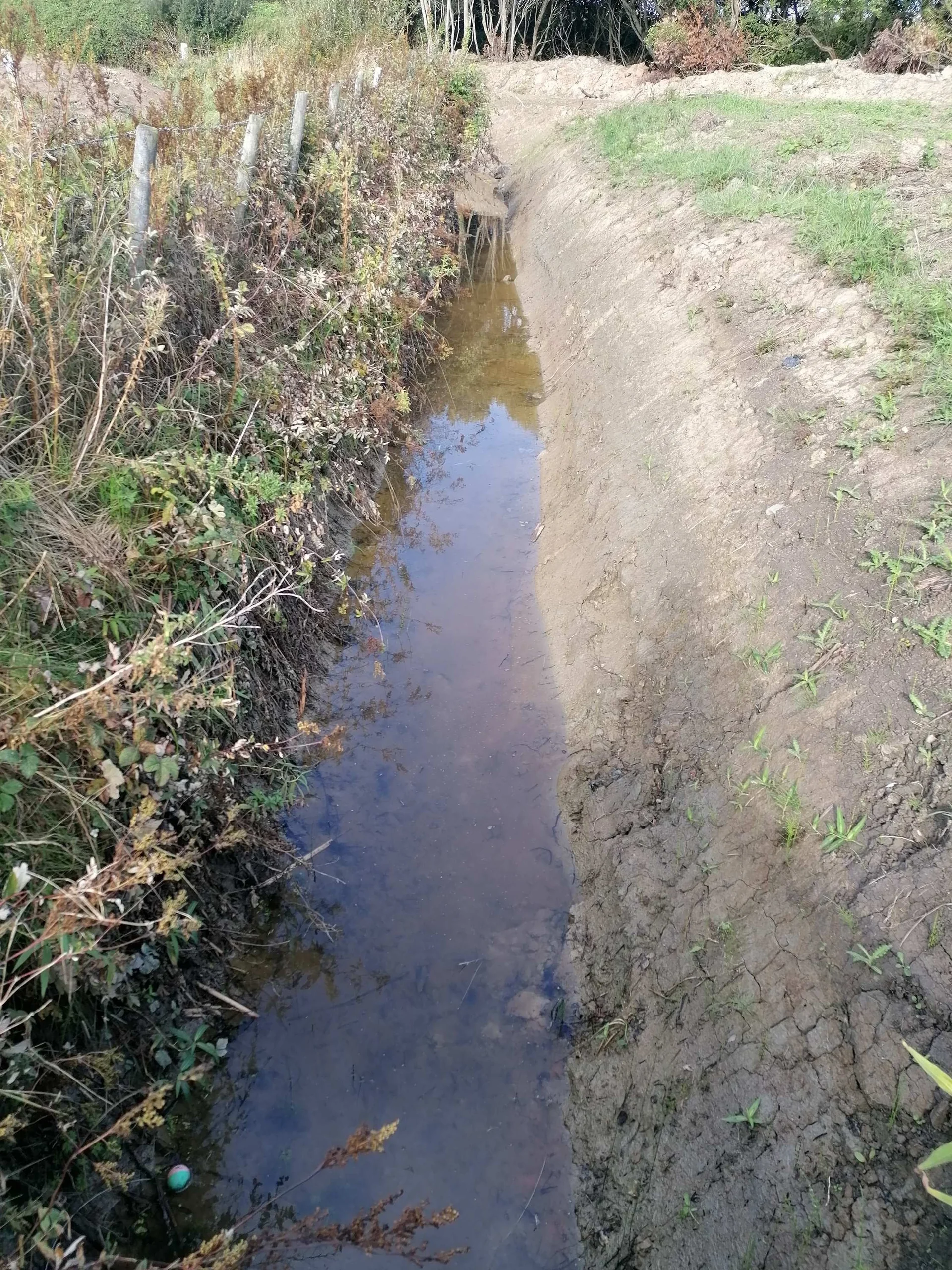
Solutions
The solutions provided on this portal focus on three key areas;
- Water use reduction
- Sustainable water sourcing
- Education
- Sitewide Water Monitoring - This includes detailed monitoring of incoming water supply, distribution network, weather data and soil moisture levels. Detailed monitoring allows usage throughout the year to be analysed, highlighting areas where water use can be improved. In addition, leaks can be quickly identified and rectified much more quickly when detailed daily monitoring takes place (Relevant case studies: Darwin Escapes)
- Irrigation Practices - This should be linked to detailed sitewide water monitoring. Irrigation should be applied according to soil moisture values, ambient weather conditions and forecasts rather than just regular irrigation windows. Alternative irrigation methods such as sub surface irrigation or pH alteration can be used to improve efficiency. (Relevant case studies: Royal Cinque Ports Golf Club, Leighton Buzzard Golf Club, Hollinwell Golf Club, St Andrews Castle Course)
- Water Recycling - Where possible water used for washdown practices and building greywater should be reused following treatment. Good examples of this are closed loop washdown facilities which can reduce annual water use by over 90% (Relevant case studies: Portmore GC, Chorley Golf Club)
- Irrigation System – full upgrade - Generally, irrigation systems have a lifespan of 20-25 years, after which key components such as pipe work become less reliable. Irrigation technology is constantly evolving and is much more efficient. Upgrades to specific items such as pump sets, controller software and pipework and irrigation heads/nozzles can and should take place throughout the lifespan of a system. However, sometimes a full upgrade of the whole system is needed to realise large scale water savings. This option is expensive, but needs to be viewed as an essential component of the golf course infrastructure. (Relevant case studies: Leighton Buzzard Golf Club, Centro Nacional de Golf)
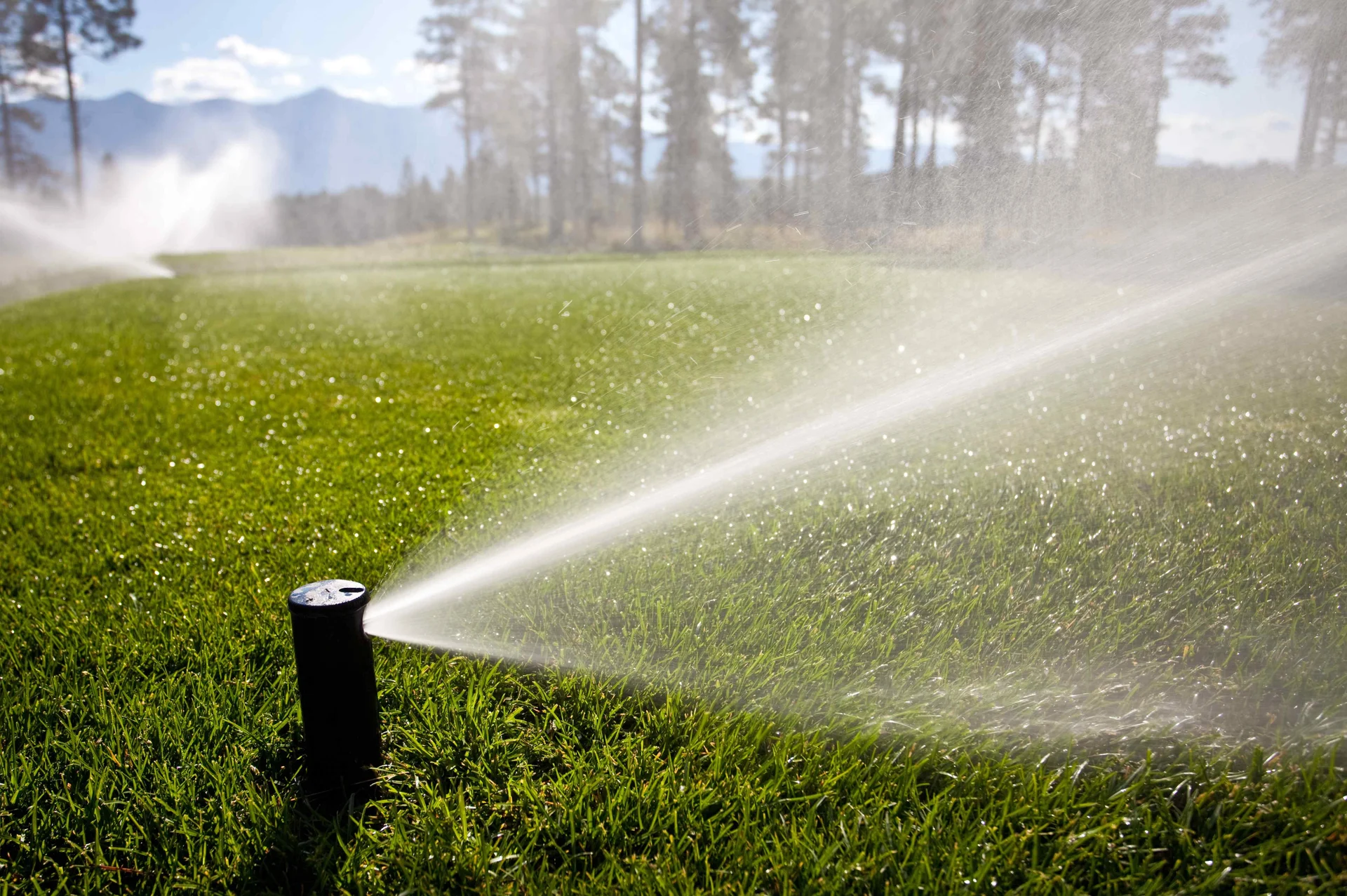
- Irrigation system – optimisation - Existing irrigation systems can be optimised to gain efficiencies. This requires a lot of detailed work and tweaking to assess all components of the system. This can involve optimising irrigation cycles or monitoring each irrigation head and the distribution of water across all irrigated areas. Nozzles can be selected for individual heads to improve distribution according to the head's location, topography, and exposure to variables such as wind. In addition, certain heads can be changed to reduce their radius from 360° to prevent irrigation of roughs and other non-essential areas (Relevant case studies: St Andrews Castle Course).
Sustainable Water Sourcing
A key theme in the GC2030 Water Security portal is that all water on a golf course should be treated as a resource and an opportunity. This may be hard to imagine during waterlogged conditions in February, but a key aspect of future water reliance is self-sufficiency. This allows golf clubs to be less reliant on water companies for water, more resilient to future climate changes and allows benefits to be given to surrounding land users, which in time could be monetised. A key aim of all UK golf courses should be to reduce, and even remove themselves from mains water for irrigation. Opportunities to diversify water supply include: Water harvesting onsite Option to integrated drainage network and water harvesting into same system Requires careful planning and input from relevant specialists to optimise system Range of options from individual buildings, car parks, localised drainage collection or full-scale landscape water collection Requires large scale water storage ability in order to harvest water during wet periods Storage options range from localised above ground tanks, larger below ground tanks, individual ponds, integrated network of ponds around a course and larger reservoirs Care needs to be taken when harvesting water in order to ensure detrimental impacts are not caused downstream. Large scale water harvesting may help to alleviate flood risk downstream, and thus gain local planning and water authority support (Relevant case studies: London Golf Club, Portmore Golf Park, Effingham Golf Club, Killiney Golf Club) Water harvesting offsite Surrounding land users (agriculture, horticulture, highways, housing) all may have excess water from their land. Planning dictates that this should not leave new developments beyond a set rate. Opportunities may exist to redirect this water onto the golf course and store for later use. Helping to reduce downstream flood risks should gain local planning and water authority support, and may also be monetised in the future (Relevant case studies: Royal Cinque Ports Golf Club) Borehole Onsite boreholes can produce significant quantities of water. Less than 20 m³ day-1 does not require a specific licence. Volumes above this require an abstraction licence from the Environment Agency. Licences may have weekly or seasonal limits Storage often required to store winter abstraction for summer use (Relevant case studies: Royal Automotive Club, Warrington Golf Club, Formby Ladies Golf Club, Romford Golf Club) Watercourse abstraction Depending on local environmental conditions and restrictions, water can be abstracted from local watercourses Less than 20 m³ day-1 does not require a specific licence. Volumes above this require an abstraction licence from the Environment Agency. Licences may have weekly or seasonal limits Storage often required to store winter abstraction for summer use (Relevant Case Studies: Northamptonshire Golf Club, Brokenhurst Manor Golf Club) Alternative water sources Treated Sewage Effluent (TSE) – although not commonly used in the UK, TSE water is often used in arid regions as the primary irrigation source for amenity turf and agriculture. UK wastewater treatment plants currently discharge back into water courses, but water should only require a small amount of additional treatment to ensure suitability for turf. Use is likely to become more widespread in the UK as water pressure increases, although issues related to quality of water and potential human health issues will have to be fully sorted before extensive use. Greywater – all buildings produce greywater (classed as wastewater but not including sewage). With onsite treatment this can be reused as irrigation water. Golf facilities, in particular ones with spa and gym facilities may produce significant amounts of greywater. Financial benefits are two-fold, with reduction in water demand from mains water, and a reduction in sewage bills if less wastewater is discharged offsite. Air conditioning water – use of air conditioning units is becoming more common in the UK. These units produce water as a by-product of cooling. This water can be used to supplement irrigation water or local irrigation of landscaped areas. Desalination – Although less environmentally friendly compared to other alternative sources of water, in some cases this may be preferable to mains water. Sustainability can be increased if electricity is sourced onsite or from green sources, and if a safe method of brine disposal is available. (Relevant case studies: China fleet Golf Club)
A key theme in the GC2030 Water Security portal is that all water on a golf course should be treated as a resource and an opportunity. This may be hard to imagine during waterlogged conditions in February, but a key aspect of future water reliance is self-sufficiency. This allows golf clubs to be less reliant on water companies for water, more resilient to future climate changes and allows benefits to be given to surrounding land users, which in time could be monetised. A key aim of all UK golf courses should be to reduce, and even remove themselves from mains water for irrigation. Opportunities to diversify water supply include: Water harvesting onsite Option to integrated drainage network and water harvesting into same system Requires careful planning and input from relevant specialists to optimise system Range of options from individual buildings, car parks, localised drainage collection or full-scale landscape water collection Requires large scale water storage ability in order to harvest water during wet periods Storage options range from localised above ground tanks, larger below ground tanks, individual ponds, integrated network of ponds around a course and larger reservoirs Care needs to be taken when harvesting water in order to ensure detrimental impacts are not caused downstream. Large scale water harvesting may help to alleviate flood risk downstream, and thus gain local planning and water authority support (Relevant case studies: London Golf Club, Portmore Golf Park, Effingham Golf Club, Killiney Golf Club) Water harvesting offsite Surrounding land users (agriculture, horticulture, highways, housing) all may have excess water from their land. Planning dictates that this should not leave new developments beyond a set rate. Opportunities may exist to redirect this water onto the golf course and store for later use. Helping to reduce downstream flood risks should gain local planning and water authority support, and may also be monetised in the future (Relevant case studies: Royal Cinque Ports Golf Club) Borehole Onsite boreholes can produce significant quantities of water. Less than 20 m³ day-1 does not require a specific licence. Volumes above this require an abstraction licence from the Environment Agency. Licences may have weekly or seasonal limits Storage often required to store winter abstraction for summer use (Relevant case studies: Royal Automotive Club, Warrington Golf Club, Formby Ladies Golf Club, Romford Golf Club) Watercourse abstraction Depending on local environmental conditions and restrictions, water can be abstracted from local watercourses Less than 20 m³ day-1 does not require a specific licence. Volumes above this require an abstraction licence from the Environment Agency. Licences may have weekly or seasonal limits Storage often required to store winter abstraction for summer use (Relevant Case Studies: Northamptonshire Golf Club, Brokenhurst Manor Golf Club) Alternative water sources Treated Sewage Effluent (TSE) – although not commonly used in the UK, TSE water is often used in arid regions as the primary irrigation source for amenity turf and agriculture. UK wastewater treatment plants currently discharge back into water courses, but water should only require a small amount of additional treatment to ensure suitability for turf. Use is likely to become more widespread in the UK as water pressure increases, although issues related to quality of water and potential human health issues will have to be fully sorted before extensive use. Greywater – all buildings produce greywater (classed as wastewater but not including sewage). With onsite treatment this can be reused as irrigation water. Golf facilities, in particular ones with spa and gym facilities may produce significant amounts of greywater. Financial benefits are two-fold, with reduction in water demand from mains water, and a reduction in sewage bills if less wastewater is discharged offsite. Air conditioning water – use of air conditioning units is becoming more common in the UK. These units produce water as a by-product of cooling. This water can be used to supplement irrigation water or local irrigation of landscaped areas. Desalination – Although less environmentally friendly compared to other alternative sources of water, in some cases this may be preferable to mains water. Sustainability can be increased if electricity is sourced onsite or from green sources, and if a safe method of brine disposal is available. (Relevant case studies: China fleet Golf Club)
Education
A huge amount of education on the issue of water security is needed throughout the golf sector and beyond in order to help action the necessary changes needed within the industry, but to also highlight the opportunities the golf industry has to influence the wider population on water security.
- Golf club members
- Awareness of challenges facing greenkeeping staff
- Future limitations (climatic and legislation)
- Change in expectations (shifting baseline of normal)
- Golf club managers and committee members
- Awareness of challenges facing greenkeeping staff
- Awareness of critical role water will play in future business model of club
- Likely budgets required to ensure future water security
- Greenkeeping staff
- Future climatic and legislative pressures
- Potential solutions
- Requirement to implement solutions correctly and for long term gain
- Surrounding land users/industries
- Opportunities to integrate water management with local golf courses
- Planners and policy makers
- Awareness of efforts golf industry is making in terms of water security
- Opportunities for golf industry to integrate into wider landscape and catchment management
Golf Course Survey - 2020
A UK wide survey (circa 100 responses) has been conducted in collaboration with other GC2030 projects. A small number of questions were asked regarding golf course water use and drainage. The results of this survey are listed in key sections throughout the portal.
Key trends highlighted in the survey include:
- At least 59% of courses experienced over ten days of significant golf hole closure because of waterlogging or flooding and 18 % experienced over 30 days of significant golf hole closure.
- Water shortages are affecting irrigation practices on at least 25% of respondent courses.
- The vast majority of course irrigation infrastructure (mainlines, storage tanks and sprinkler heads) is at least 10 years old:
- Main pipelines = 55 % older than 20 years and 83 % older than 10 years.
- Storage tanks = 36 % older than 20 years and 64 % older than 10 years.
- Sprinkler heads = 25 % older than 20 years and 64 % older than 10 years.
- At least 28% of courses are still fully reliant on mains water
- Large number of courses are not self-sufficient in water (20-30 %)