
Opening Golf to the World
Soil moisture sensors and moisture monitoring
Technology is increasingly being used by greenkeepers to inform irrigation decisions.
Technology is increasingly being used by greenkeepers to inform irrigation decisions. This should involve regular assessment of soil moisture on key areas of the golf course to build up a record of:
- Evenness of irrigation application
- Soil moisture at different depths
- Localised variations in soil moisture caused by topography, drainage, shading, etc
- Actual soil moisture throughout the year
- What different surfaces can tolerate in terms of % moisture
- How much irrigation needs to be applied
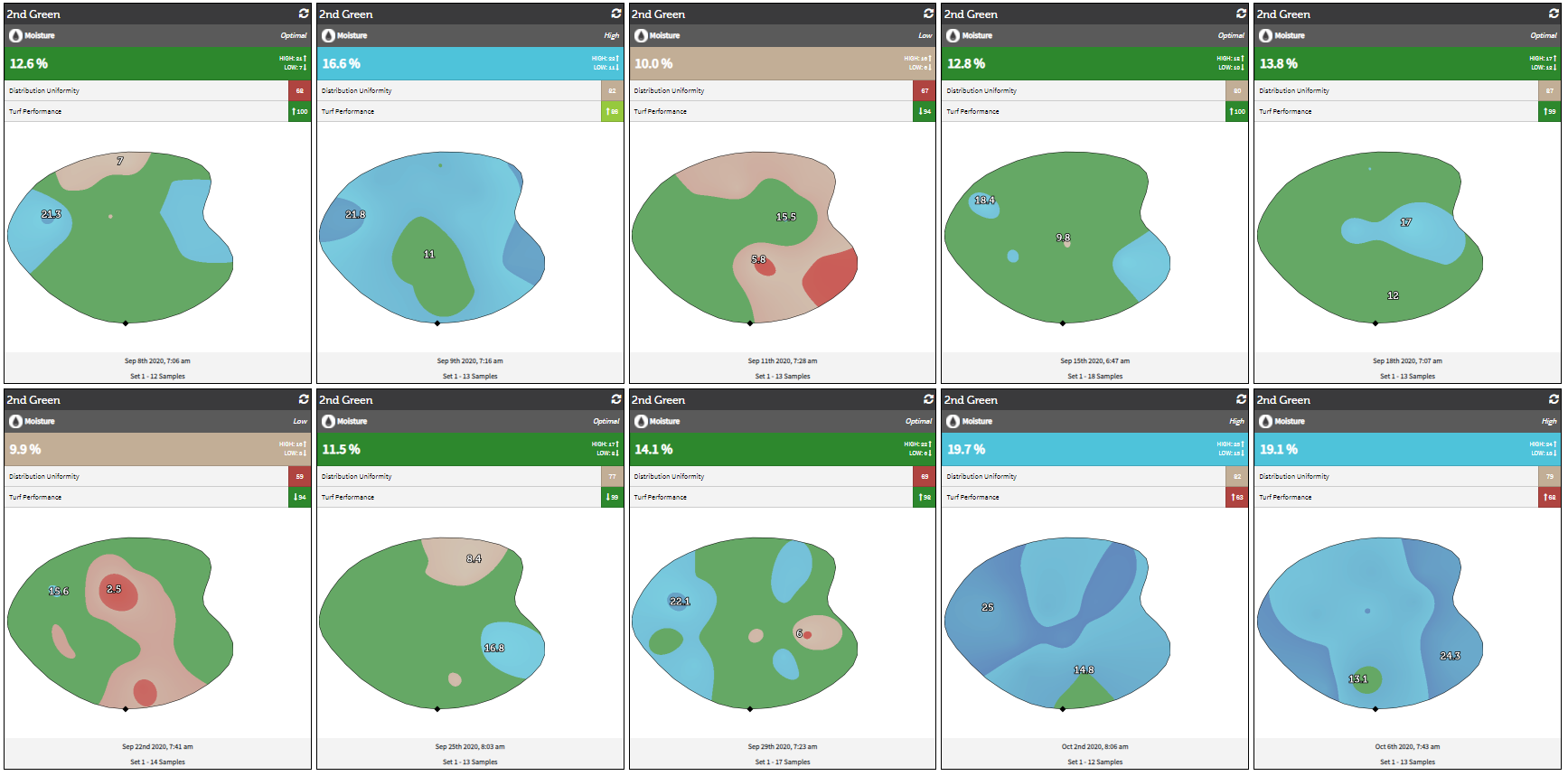
This information is very powerful as it is collected over time. Most greenkeepers who start this practice rapidly realise that turf can tolerate significantly lower soil moisture content than previously realised. In addition, specific areas that require extra water can be targeted without overwatering other areas. Watering to a set soil moisture level, as opposed to regular time-based applications can result in significant water savings. This can result in positive improvements to turf surfaces, most notably sward composition, turf health, future stress tolerance and surface playability performance.
Common methods of assessing soil moisture include:
- Handheld manual sensors. These require the greenkeeping team to keep a detailed set of records
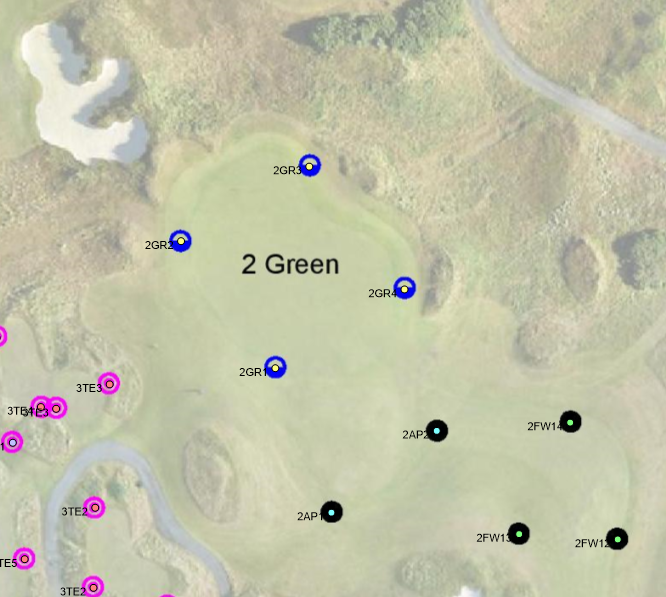
- GPS enabled manual sensors. These require the greenkeeping team to manually take assessments, with data automatically logged on a cloud-based system. Some systems can then provide moisture maps to show predicted moisture across a turf surface
- Soil based probe systems convey live soil data to a central database/cloud system
- Drone based sensors. These require regular mapping with appropriate kit and flying licences to build up detailed maps of a site.
In addition, onsite weather stations can be used to help predict water losses via evapotranspiration (ET). Various models are used to inform how much irrigation needs to be applied to replace losses the previous day through evapotranspiration. Caution should be given when using these models as small calculation errors can have large implications on water replenishment.