
Opening Golf to the World
Curtis Cup
A history of excellence: The legacy of the Curtis Cup

04 Jun 26
6 mins
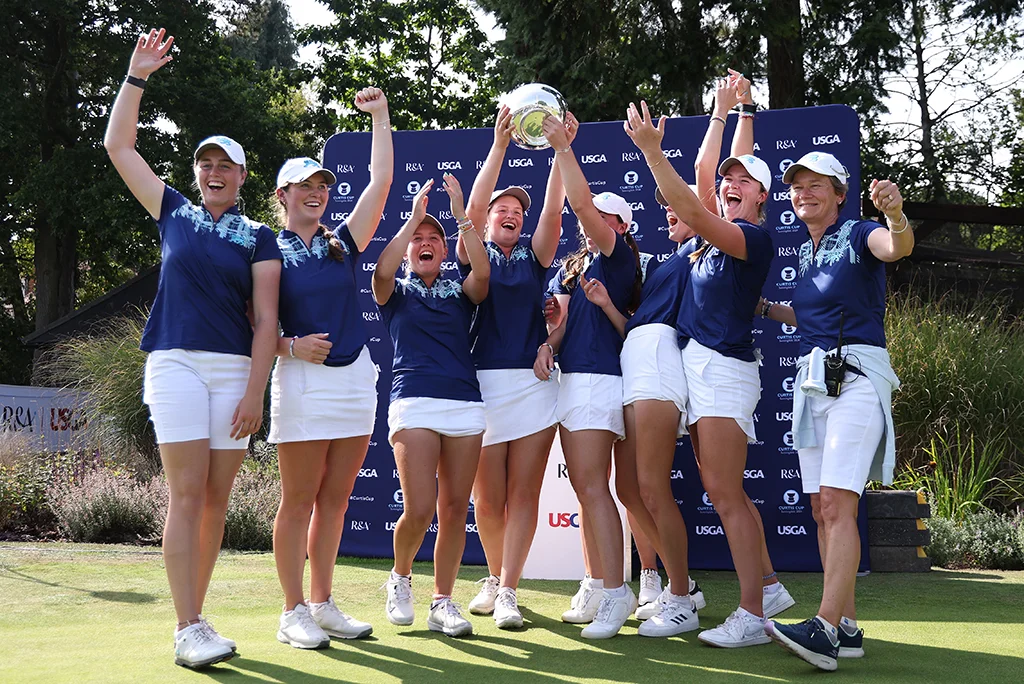
Since its inception in 1932, the Curtis Cup has held a distinguished status as the premier team trophy in women’s amateur golf.
Named in honour of prominent American amateur golfers from the early 20th century, sisters Harriot and Margaret Curtis - who generously donated the trophy for an international match between the United States of America and Great Britain - the biennial contest has evolved into a hallmark event over the last 94 years.Early years and format evolution
The inaugural match, featuring eight players from each continent, took place at Wentworth in England. Despite a hiatus during World War II from 1942 to 1946, the USA side dominated the early years. Great Britain had to wait until 1952 to clinch their first victory by the tightest of margins, 5-4. Although the US team reclaimed it on home soil in 1954, the Cup returned to the British Isles in 1956 after a triumph at Prince’s in Kent. In 1958, the Great Britain team expanded to include players from Ireland, shaping the competition into the USA vs GB&I format known today.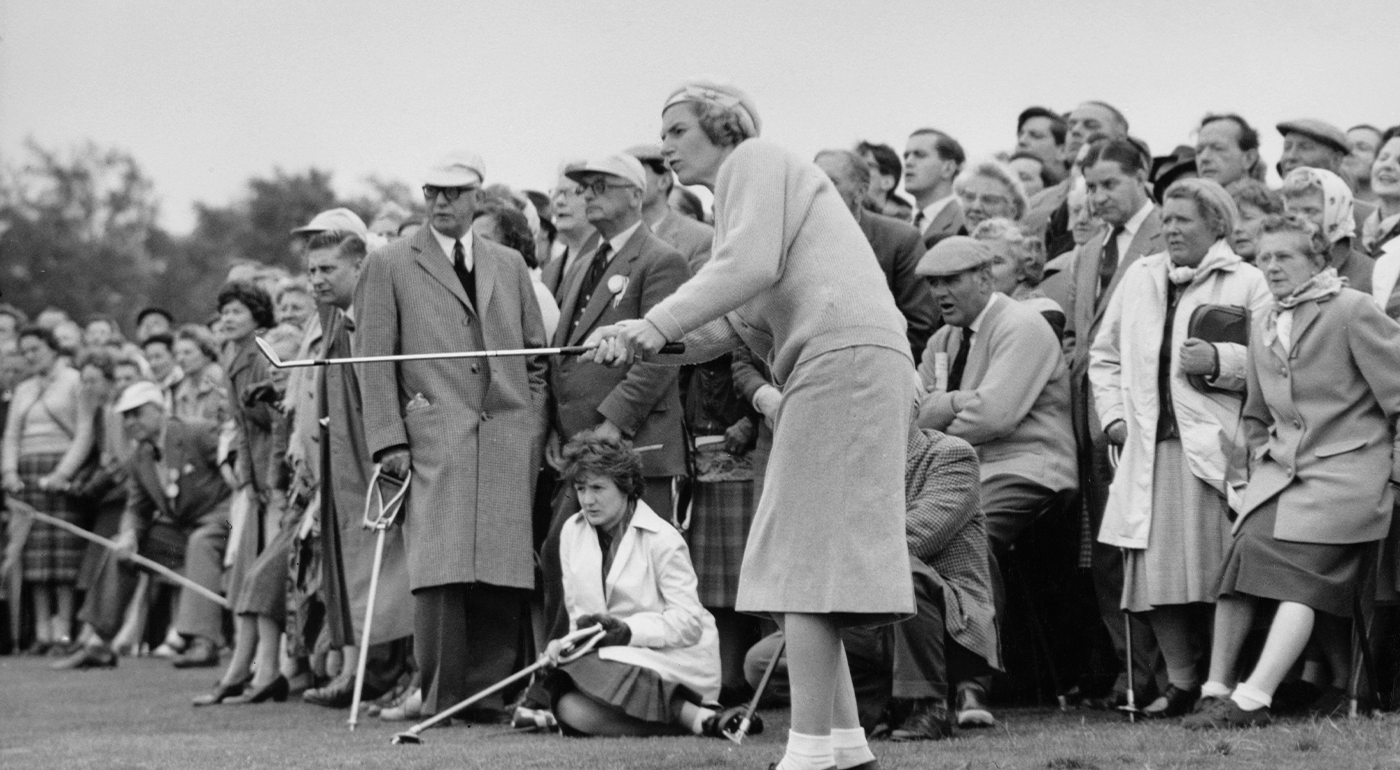
Angela Bonallack during the 11th Curtis Cup match in 1960.
The evolution of the Curtis Cup extends beyond team inclusion. The original format consisted of three foursomes and six singles matches, totalling nine points, each played over 36 holes in a single day. By the time the 13th Curtis Cup was held in 1964, the format had further expanded, with 18 points now at stake. This included three foursomes and six singles matches played each day over two days.
In 2008, the contest underwent another transformation, spanning three days. The match now involves eight players on each side, vying for a total of 20 points through three foursomes and three fourball matches on each of the first two days, followed by eight singles matches on the final day.
Unforgettable drama and historic comebacks
It is fair to acknowledge America’s sustained dominance in the Curtis Cup. Out of the 43 contests played to date, the USA team has emerged victorious in 31, GB&I has claimed victory in nine, with only three matches concluding in a tie. Yet despite this overarching dominance, the contest boasts thrilling standout matches that teetered on the edge, with numerous memorable moments contributing to the rich history of the match. The match in 1986 is a case in point. GB&I triumphed on American soil for the first time, led by Captain Diane Bailey. At Prairie Dunes in Kansas, there was a famous 13-5 win over Judy Bell's home team. Bailey repeated the feat two years later with a 11-7 victory for GB&I at Royal St George's. A compelling instance occurred in the 1978 contest at Apawamis Club in Rye, New York, widely regarded as one of the most thrilling in history. GB&I aspired to secure the Cup for the first time in 22 years, but the US side had different plans, prevailing 12-6. Notably, seven out of the 18 matches that went in the USA’s favour reached a climactic conclusion on the 18th hole. In 2004, at Formby in England, GB&I started strongly, winning five out of six foursomes matches. However, the USA team executed an impressive comeback by winning nine out of the 12 singles matches, ultimately clinching a 10-8 triumph. A comparable situation unfolded at the 2010 Curtis Cup, where the USA trailed after the first day but won all six matches on the second day and then shared the singles to secure victory 12½-7½.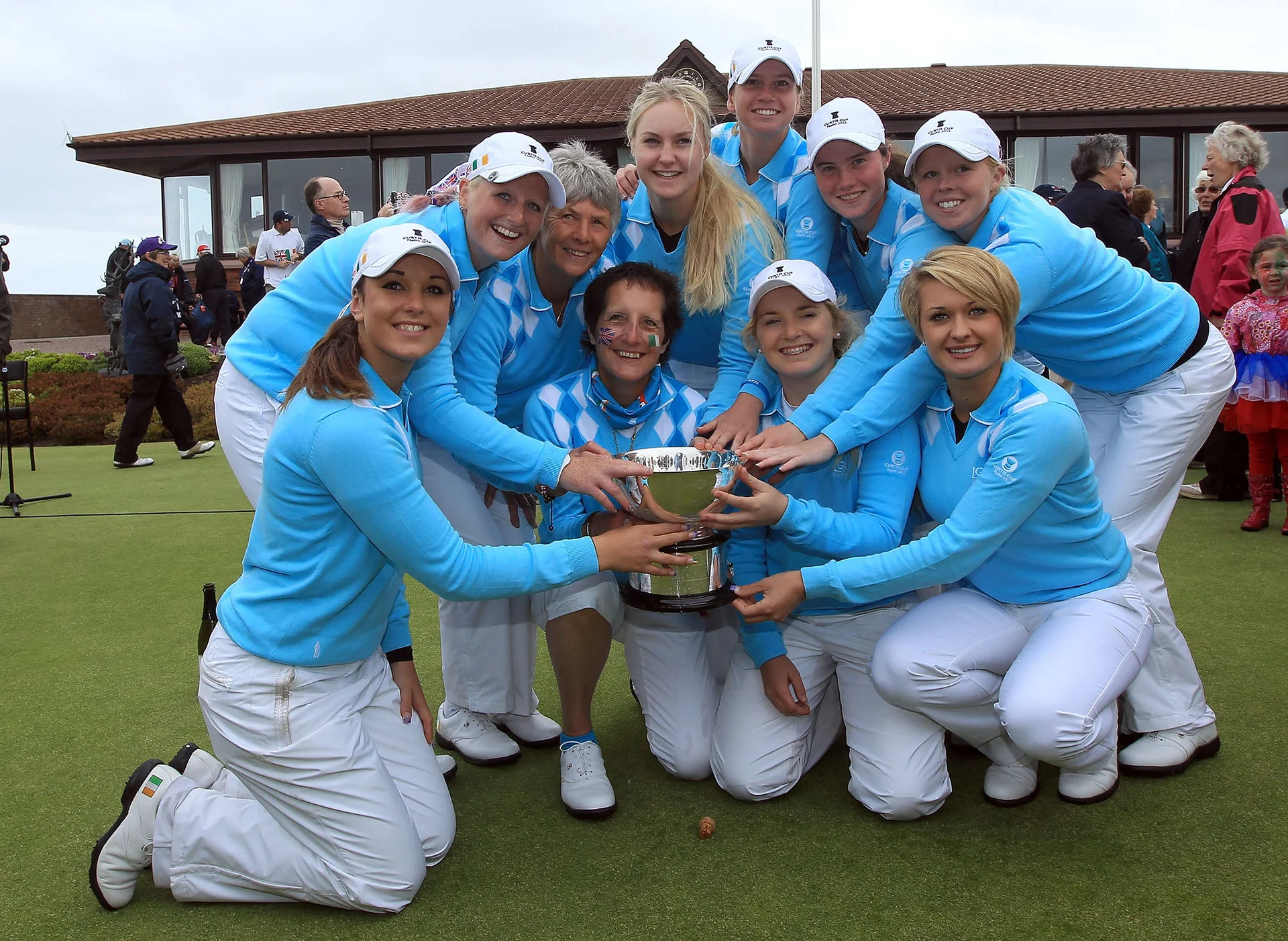
The GB&I team after winning the 2012 Curtis Cup match at Nairn.
In 2012 at Nairn in Scotland, GB&I secured a historic win when the team triumphed in five singles matches on the final day, narrowly clinching victory with a score of 10½-9½. Significantly, this win marked their first title since 1996 and meant that the Curtis Cup joined the Ryder, Walker, and Solheim Cups on the European side of the Atlantic Ocean.
Most recently, the 2024 match at Sunningdale added another unforgettable chapter to this legacy. In a nail-biting encounter on the world-renowned Old Course, GB&I produced a sensational performance to edge out a formidable American team 10½-9½. It was a deeply emotional victory for the home side, capturing the Cup for the first time since 2016 and proving that the modern era of the competition is as fiercely contested as ever.
A modern classic at Sunningdale
The 43rd edition of the match added a sensational chapter to this storied legacy, played out in glorious sunshine as Sunningdale hosted the Curtis Cup for the first time. Spurred on by a record-breaking crowd, the GB&I team broke that eight-year drought at the end of a thrilling week. Entering Sunday’s singles with a 7-5 lead, Catriona Matthew's side faced intense pressure from a formidable American line-up that initially led in six matches. USA’s Asterisk Talley defeated world number one Lottie Woad 3&2, but GB&I fought back dynamically. Patience Rhodes won 6&5, and Sara Byrne capped an unbeaten week with a 3&2 victory. Down the stretch, Lorna McClymont birdied four of five holes on the back nine to win 3&2. Meanwhile, Mimi Rhodes - who brilliantly battled back from three down - holed a vital par putt on the 17th to secure the decisive half-point, sparking ecstatic celebrations.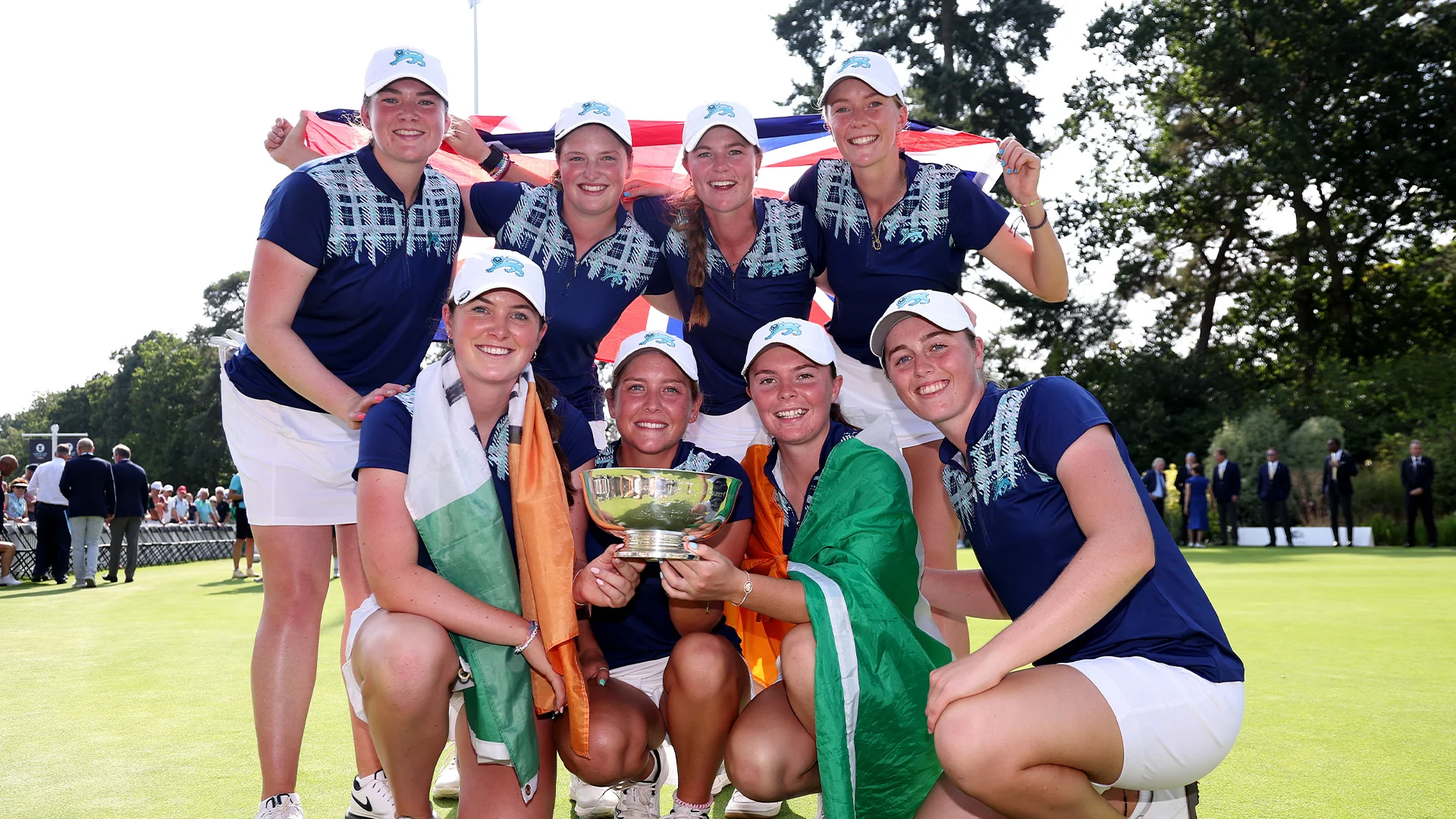
The victorious GB&I team after the 2024 Curtis Cup at Sunningdale.
A launchpad for global stars
The Curtis Cup serves as an incredible platform for showcasing the talent of emerging female golfers, with many former players achieving successful professional careers that include major championship victories and appearances in the Solheim Cup. In 2004, at the previously mentioned match at Formby, Michelle Wie, at the age of 14, became the youngest-ever Curtis Cup player. In 2008 at St Andrews, US Solheim Cup Captain Stacy Lewis achieved a perfect record, winning all five of her matches. This accomplishment was matched by GB&I’s Bronte Law in 2016 at Dun Laoghaire in Ireland and by the USA’s Kristen Gillman in 2018 at Quaker Ridge in New York. Law was also a key member of the winning GB&I team at Nairn in 2012, alongside Charley Hull and Leona Maguire. Other noteworthy Curtis Cup players who garnered valuable knowledge and experience before transitioning to the professional ranks include Dame Laura Davies, Jessica Korda, Lexi Thompson, Georgia Hall, Rose Zhang in 2022, and 2024 world number one amateur Lottie Woad, who delivered crucial points during the Sunningdale triumph.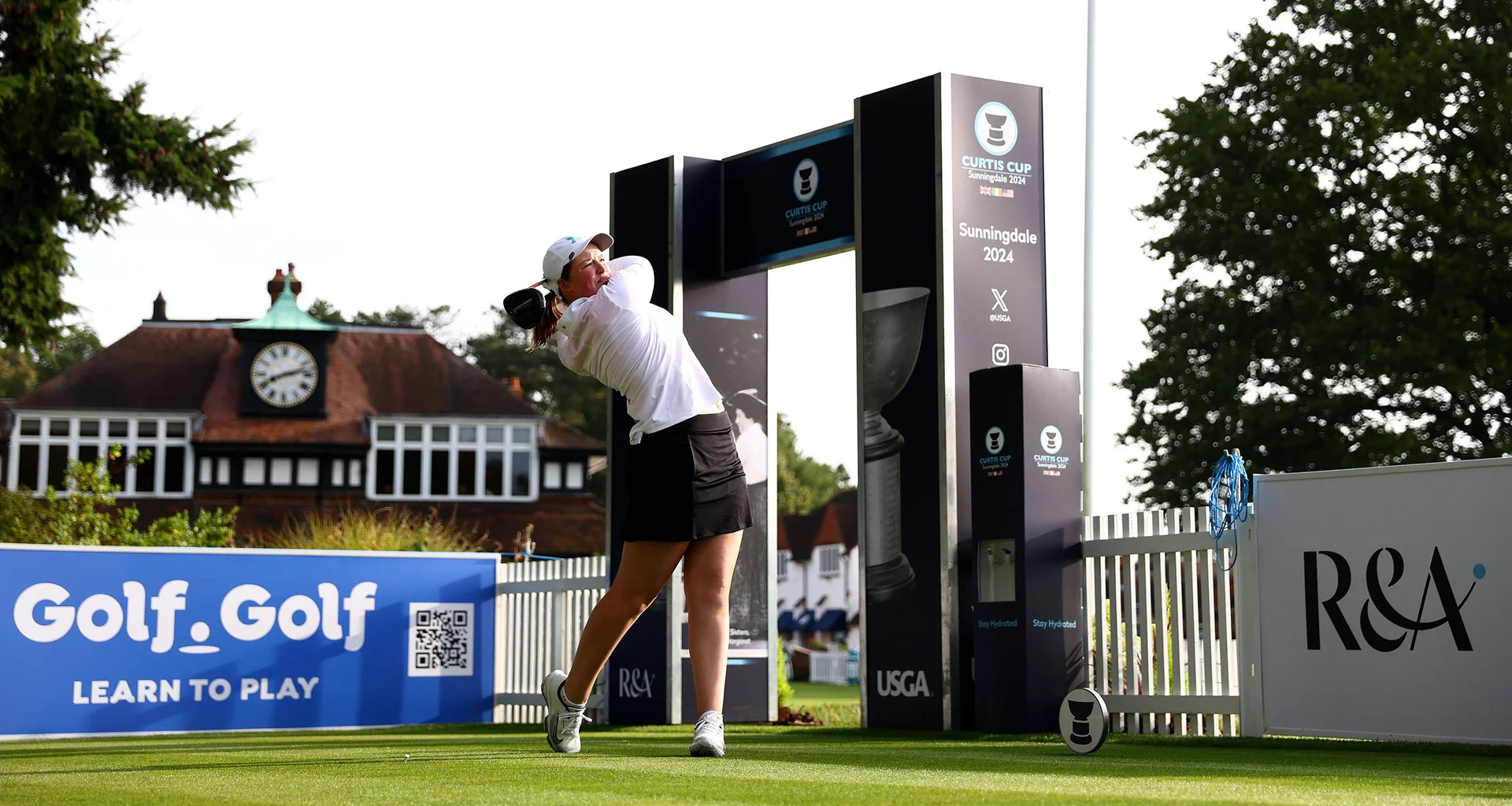
Lottie Woad tees off at the 2024 Curtis Cup match at Sunningdale.