Opening Golf to the World
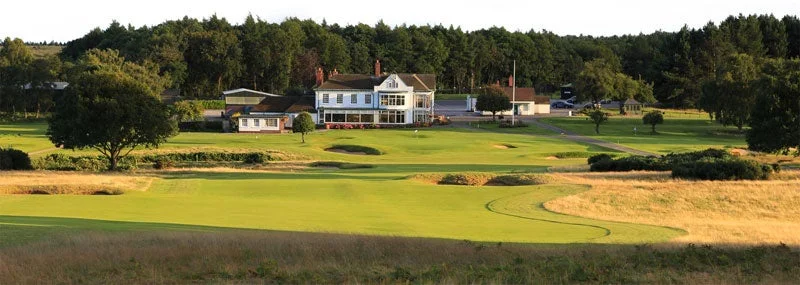
Hollinwell Golf Club
Hollinwell Golf Club use a number of management practices and tools in order to improve the efficiency of their irrigation system as much as possible. This has translated into significant agronomic benefits, with the Club's lean approach to turf management allowing the course to be much more resilient to future climatic extremes.
Hollinwell Golf Club reduce artificial inputs into all turf areas wherever possible. This extends to irrigation, which is kept to an absolute minimum. The aim of this maintenance ethos is to encourage the development of swards which withstand greater levels of turf stress, play better and reduce environmental impact.
The club use around 3500-6000m3 of irrigation water a year, (although this was increased to 7300m3 in 2018) on greens, tees and approaches. This water is sourced from ponds onsite which naturally refill during winter months. With a current abstraction licence from the pond of 13,500m3, the Club has sufficient capacity to increase irrigation if required, although they don't have plans to do so.
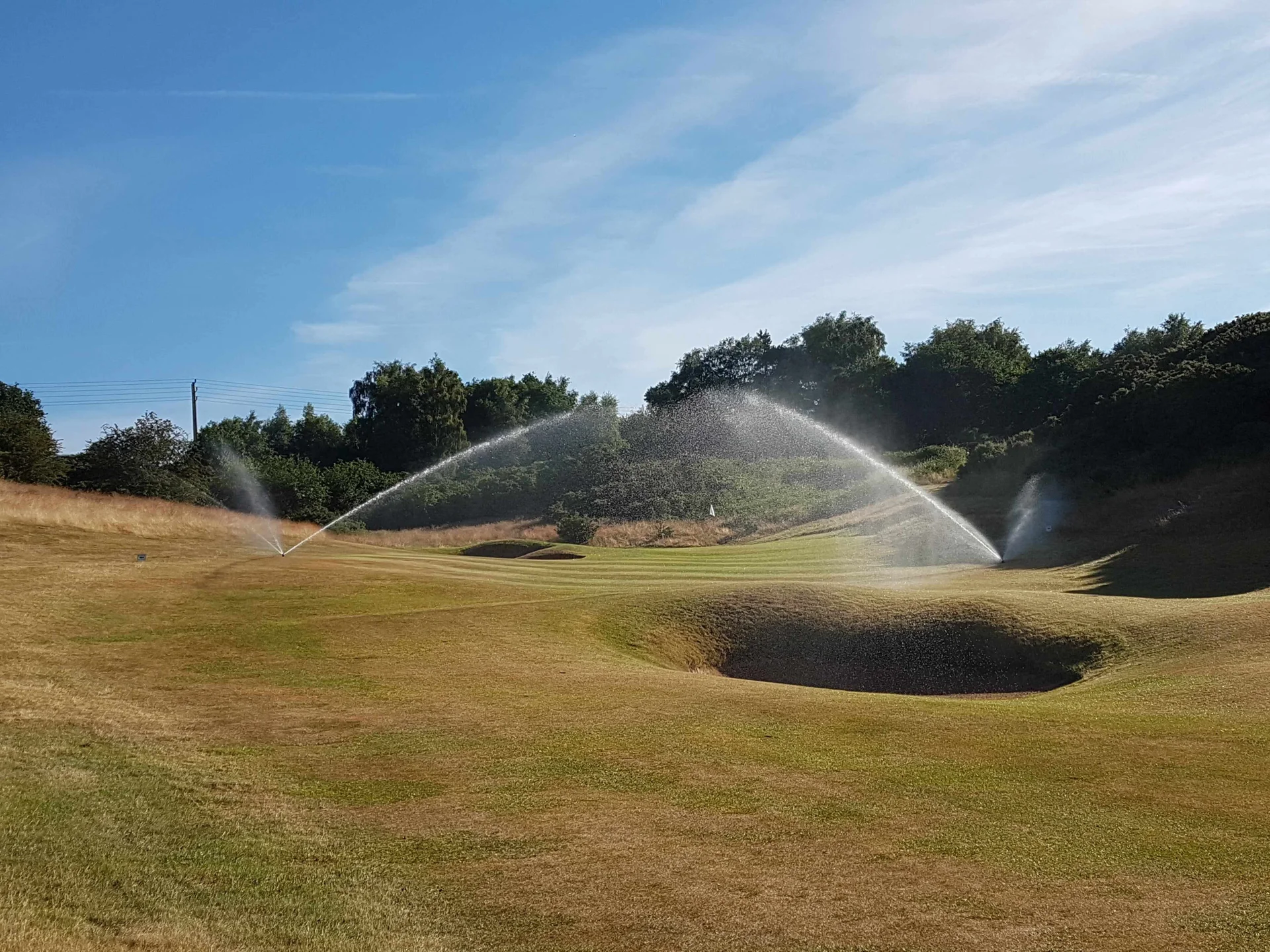
The irrigation system was upgraded in 2015 with all valve in heads across the course and fully computer controlled. This allows extremely accurate and bespoke irrigation cycles for individual areas with all irrigation determined by regular moisture probe readings to prevent over watering. In areas dominated by fescue and bentgrass soil moisture is now kept between 10-15%. This value is greater in more annual meadow-grass dominated areas, although the team are using moisture management as part of the strategy to reduce annual meadow grass occurrence.
This lean practice is extended to fairways which survive on zero supplementary irrigation. This, in addition to a very low fertiliser programme has created fine grass fairways which require very little to no summer mowing and are now much more resilient to summer droughts. This approach is now being extended to tees which are being carefully supplemented with native fen soil. This will increase water holding capacity to try and improve self-sufficiency and reduce irrigation reliance.
In 2019 the Club also invested in an irrigation acid dosing system to alter water pH. The water abstracted from site is naturally high in carbonates and has a pH of 8. This has been linked to outbreaks of Take-All Patch as well as a slower response of the turf to irrigation. With the new system, acid is drip fed into the main irrigation tank on demand. This reduces water pH to 6.5 at the head which is in line with native soil pH of 6.5 at 100mm depth. Thus, the system seems to be able to adjust the immediate pH on the surface, which is much more influenced by irrigation water. This seems to have significantly improved seed germination, as well as speed of response to fertiliser and irrigation programmes, further reducing the amount needed to be applied to surfaces.
Key Figures
- Water requirement: 3500-7300m3 a year
- Total pond capacity: 13,500m3 a year