
Opening Golf to the World

Rainwater Harvesting: Larger Scale Storage
To increase the volume collected, rainwater can be harvested from roofs, car parks and other hard standing areas and stored in larger tanks or moved to a site-wide storage system.
To increase the volume collected, rainwater can be harvested from roofs, car parks and other hard standing areas and stored in larger tanks or moved to a site-wide storage system.
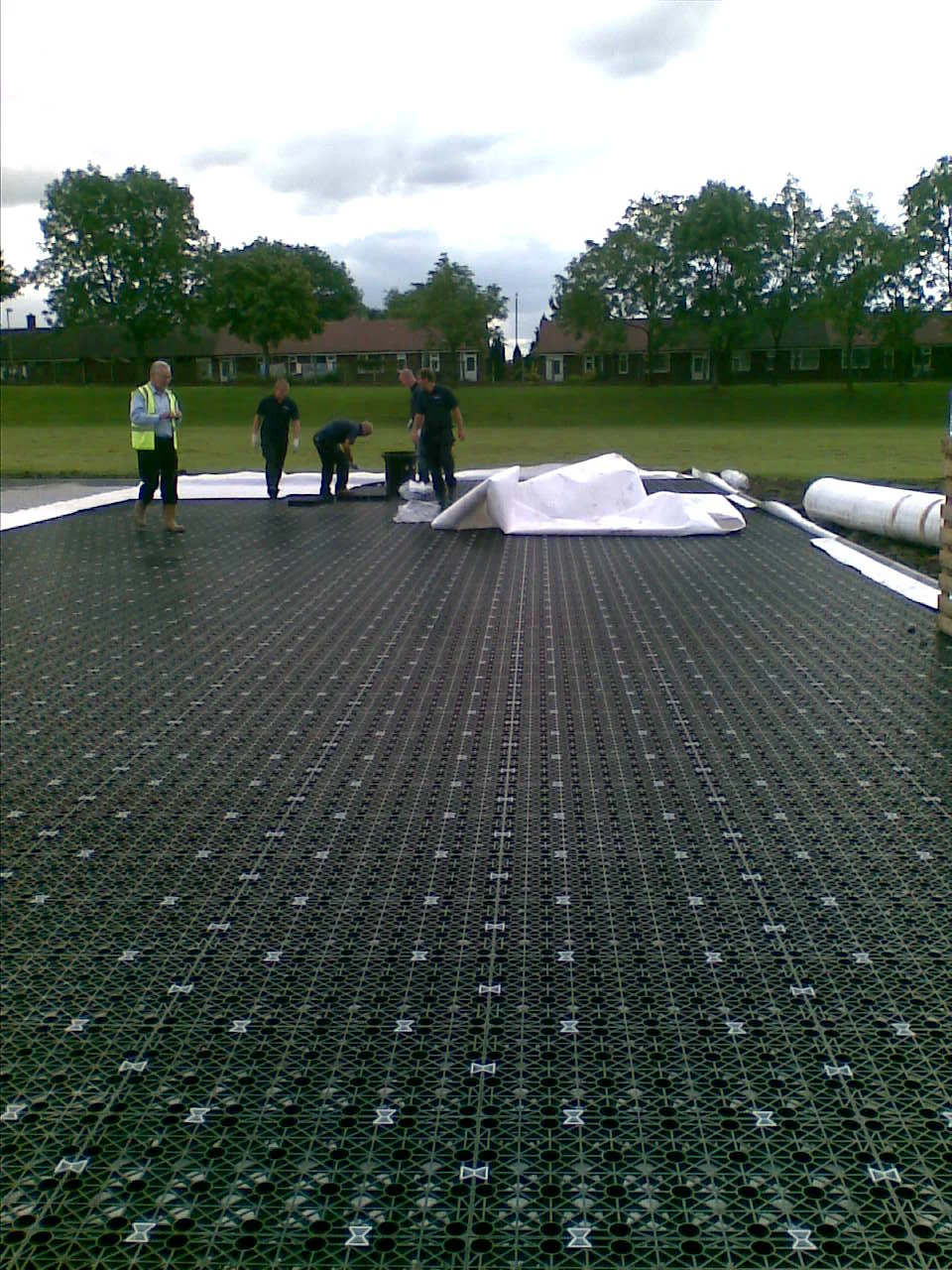
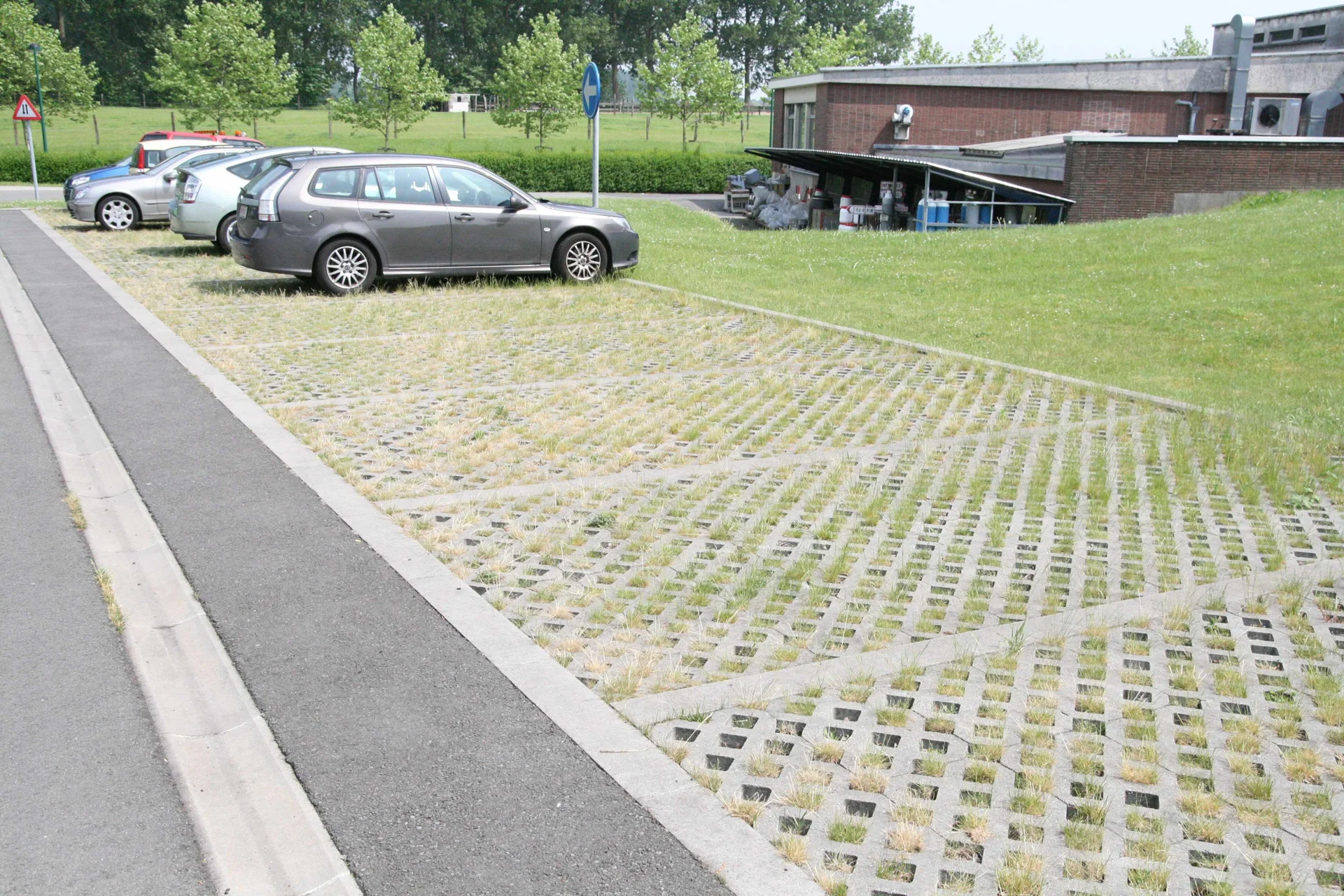
Storage tanks can be made of plastic, steel, concrete or more innovative and sustainable materials, such as geocellular storage systems, which can be incorporated under car parks or as a blue roof.
Water harvested from these types of surfaces can either be pumped or moved via gravity to the main irrigation storage area. Alternatively, water can be used more locally for landscape irrigation, or within a clubhouse for greywater use such as toilet flushing.
In most cases, water is directed from roofs or car parks into storage tanks located below ground. These can be shallow tanks with a large surface area, or more conventional buried tanks. The size and shape of the storage can be tailored to a site. Generally, tanks should be situated below car parks or low-key landscape areas. The system should be designed to reduce excavations as much as possible and to optimally capture water, i.e. large enough to capture most average rainfall, but not too large to avoid sitting empty for most of the time. Underground storage can reduce the risks of algal growth and from the water overheating.
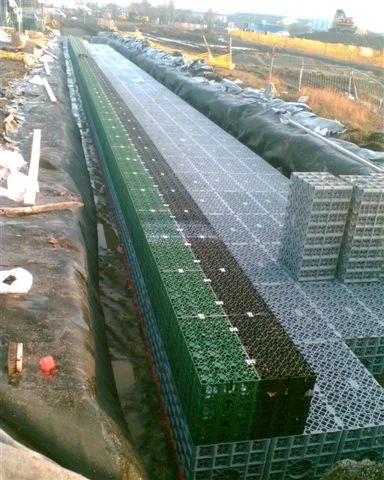
Depending on the design, storage tanks can be elevated so that gravity is used to redistribute the collected water. Storage can also be situated below the surface level and redistributed with the use of pumps. Most modern rainwater storage systems take advantage of both scenarios. Header tanks store run-off collected by gravity, whilst the excess run-off is stored in the main storage tank located below ground level. When the header tank runs out of water, a pump refills it from the main storage tank to maintain a set capacity.
Careful consideration needs to be given to the source of the harvested run-off water and its possible contamination risk. Run-off from car parks will need special filtration to remove any hydrocarbon contaminants and salt or other materials used to melt ice over winter months, whilst roof run-off will require some filtration to remove sediment and biological particles. It is recommended that any surface from which water is harvested from is regularly cleaned. However, care must be taken to ensure that cleaning products used are compatible with the final use of the water, i.e. biocides should not be used to clean a roof if the run-off water will be used as irrigation water.
This type of tank system is often used in new buildings to reduce the speed at which water leaves a development to meet drainage planning restrictions. With joined-up thinking, these systems can often be integrated to save overall costs of a development and provide a water attenuation option, as well as a source of water. In addition, costs may also save on drainage bills if water is redirected elsewhere to a sewage network.
Factors that need to be considered when deciding on the location of a large RWH tank include:
- Harvesting catchment area
- The structural capacity of the building to support the weight of stored water (if a blue roof)
- Local topography
- Ground conditions
- Temperature of stored water
- Level of accessibility for some of the systems
- How water will be reused
- Ability to treat water
- Land use above the tank and if additional structural support is needed
- Cost of excavation and construction
Costs
Typical costs = £5,000-£100,000 (size dependent)
Typical size = 5-400 m3
Typical yield of greenkeepers shed = with an average rainfall of 700 mm a year and a 400 m2 area (20 m x 20 m) can yield approximately 200-250 m3 a year
Typical yield of a carpark = with an average rainfall of 700 mm a year and a 2500 m2 area (50 m x 50 m) can yield approximately 1400-1800 m3 a year.
See here for more information on Rainwater Harvesting