Opening Golf to the World
Desalination
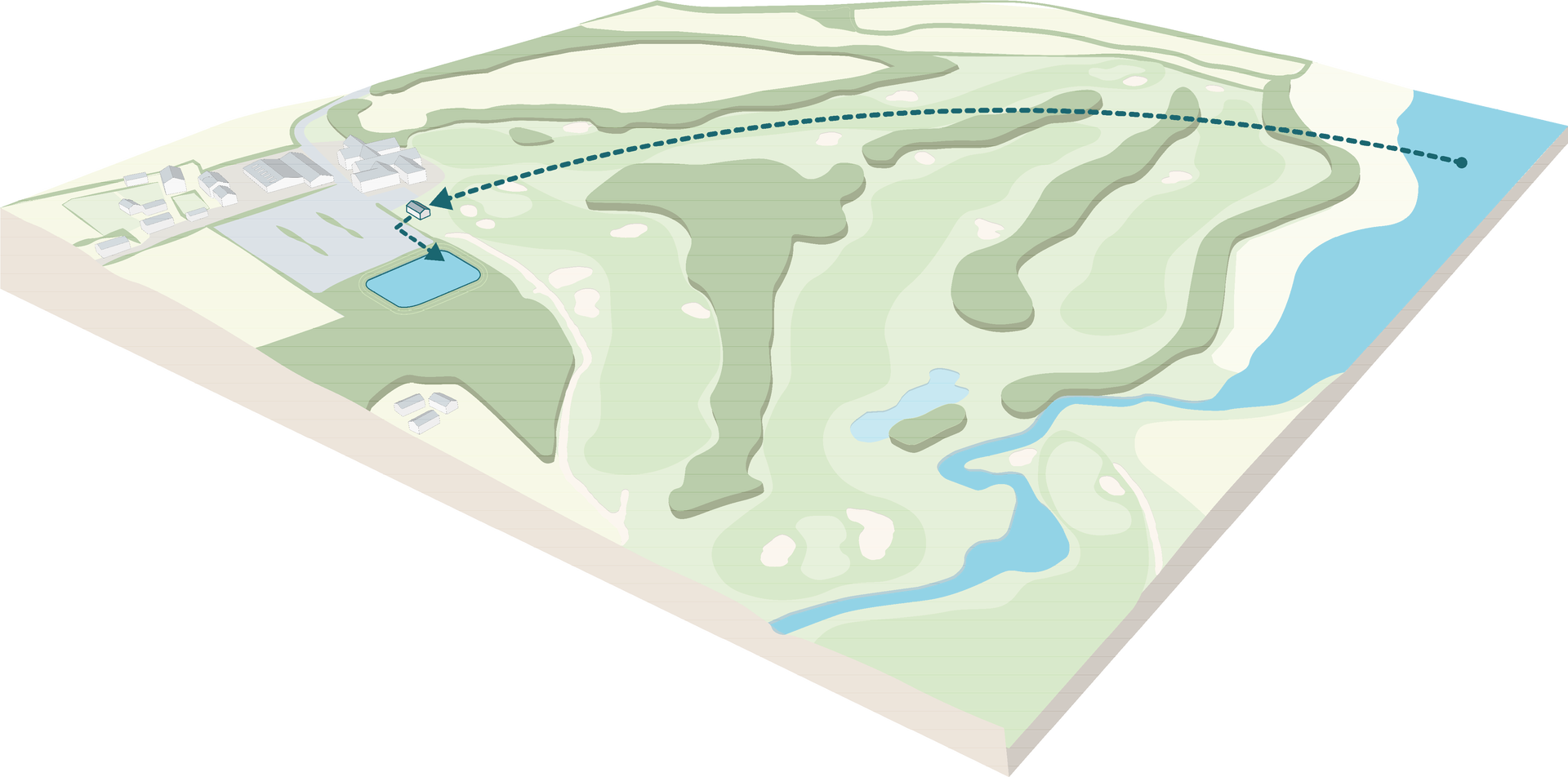
Desalination reduces the salt content in sea water a level that is acceptable for a particular application.
Although not common in Western Europe, desalination is common in the Middle East, and thanks to new portable technology becoming more common in Mediterranean countries to meet increased water demand. Desalination reduces the salt content in sea water to a level that is acceptable for a particular application. Cool season turfgrass generally cannot tolerate high levels of salinity and therefore any desalinated water used to irrigate these grasses requires intensive treatment. Large commercial desalination plants are not currently commonplace in the UK. If these are introduced, the water produced by such systems is likely to be reserved for potable use only. A small local scale solution for golf courses would eb the use of portable desalination units. These systems are often pre-manufactured into containers and can be easily installed on-site to provide between 50-1,000 m3 a day. They generally use Reverse Osmosis (RO) to produce clean water by passing salt water through various membranes to remove the salt. This results in a concentrated brine waste product which needs to be carefully disposed of to prevent environmental damage.
This source of water should be considered only after other sustainable options have been explored, as it is energy intensive and can lead to environmental issues around water intake and brine disposal. Energy requirements of desalination have significantly decreased in the last 30 years but remain greater than standard treatment and transport of surface water. However, for some coastal courses this may be an option to ensure security of supply. This option also becomes more sustainable if renewable energy can be produced on-site or sourced from a sustainable grid network.
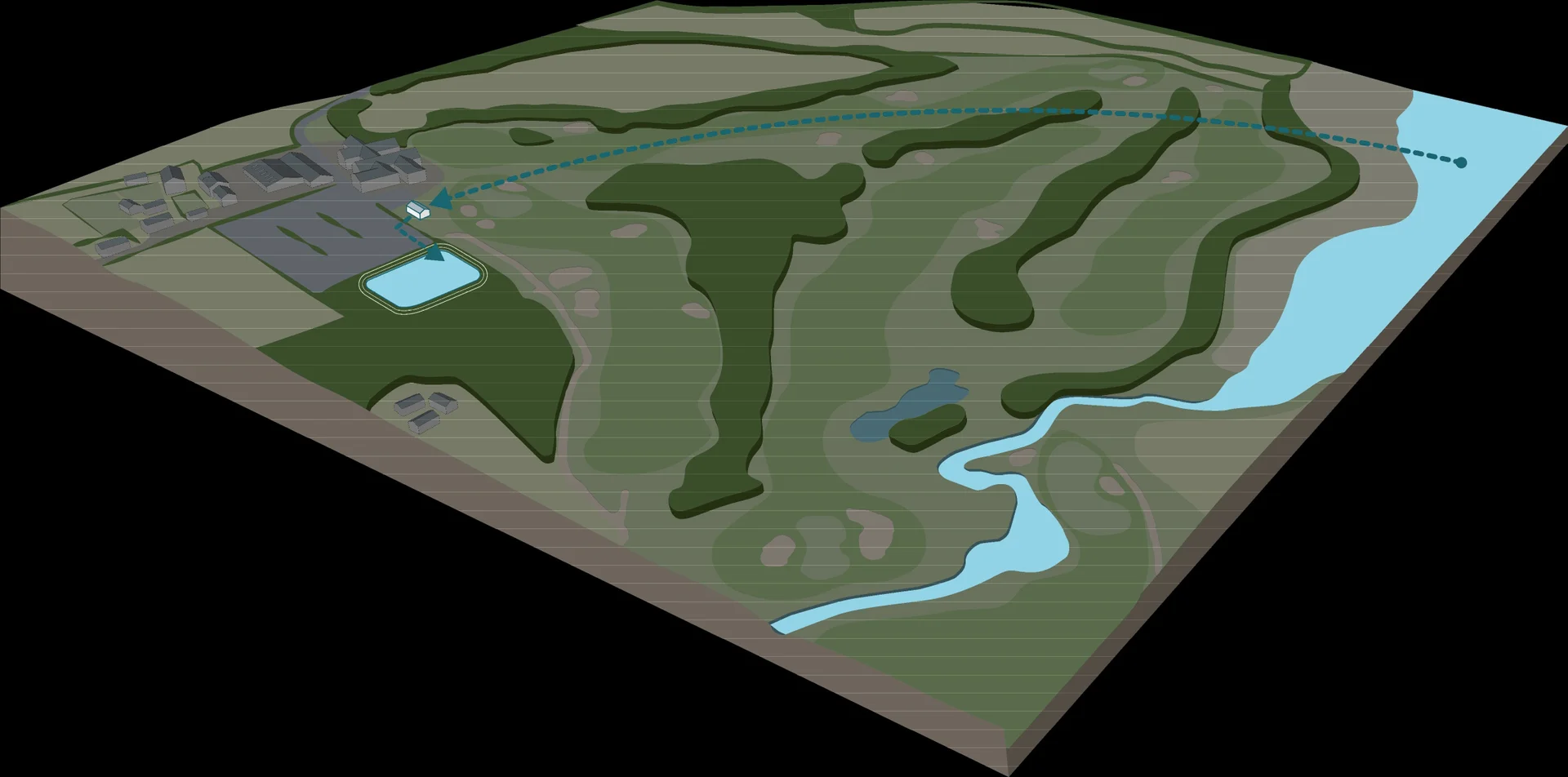
Desalination may be required in the treatment of some wastewater (grey water and wastewater sections).
Design considerations
- Ecological impacts of extraction
- Disposal of brine post treatment
- Energy requirements of system and thus running costs
- Sustainability of system, i.e. can a golf club produce its own renewable energy
- Water budget requirements – can the system produce sufficient water
- Legislative restraints