Opening Golf to the World
Agronomic
The agronomic management and the water management of a golf course are inherently linked. The agronomic decisions that are taken in respect of managing turf playing surfaces should always be considered in light of a sustainable, integrated, site water management action plan.
The agronomic management and the water management of a golf course are inherently linked. The agronomic decisions that are taken in respect of managing turf playing surfaces should always be considered in light of a sustainable, integrated, site water management action plan. Whilst the GC2030 Integrated Turf Management Best Practice Handbook provides detailed guidance on sustainable greens management practices the following points highlight those water management practices which can be considered to have the highest impact on course condition.
Appropriate Irrigation Practices
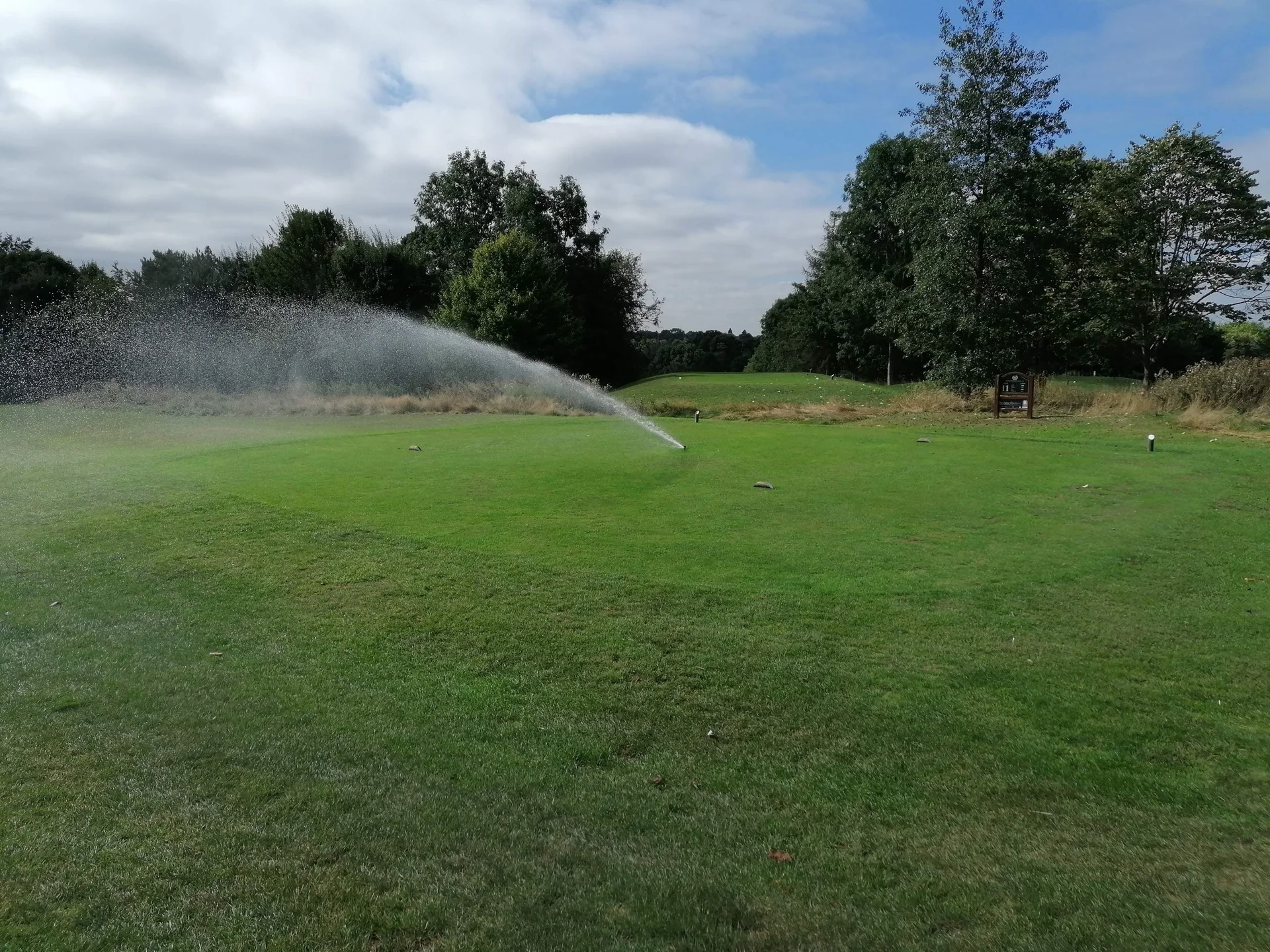
Sward species composition and playing surface performance are heavily influenced by the irrigation strategy. During dry spells of weather it can be necessary to irrigate manually or through automatic systems to maintain turf health and avoid turf thinning or loss of turf cover due to drought stress and turf dieback. Moisture levels of between 15% - 25% are generally considered appropriate to support healthy grass plants. During dry spells irrigation may need to be applied to supplement existing reserves in the soil or rootzone profile and raise levels up into this range. Managing turf within this moisture range will tend to favour the desirable fescue and bentgrass grass species that provide more sustainable playing surfaces.
Moisture meters or moisture probes are used by turf managers to allow for real-time, accurate monitoring of moisture levels within soil profiles and enable informed decisions to be made about the requirement for irrigation.
Over-application of irrigation and the deterioration in turf quality that develops as a direct result needs to be avoided. Excessive irrigation promotes softer, slower playing surfaces with increased rates of organic matter build-up. This in turn provides an environment that favours increased levels of the weed grass annual meadow-grass which is inherently a more prolific producer of organic matter. Over irrigated surfaces therefore suffer with increased rates of organic matter build-up, sward species deterioration and consequently require more intensive maintenance inputs to produce appropriate playing surfaces.
Soil Surfactants
Soil surfactant turf products, including wetting agents, can be considered integral to effective moisture management programmes, enabling more effective delivery of water infiltration into the soil or rootzone profile. This in turn can result in significant reductions in water use or requirements. The use of soil surfactants can address a variety of problems such as rewetting dry, water-repellent areas on a green to move water more effectively through the profile. There are a range of turf products available, adopting a number of different soil surfactant chemistries and in essence these products help to improve the plant growth environment. Significant water conservation can be possible especially where soil water repellency has been an issue.
Aeration Requirements
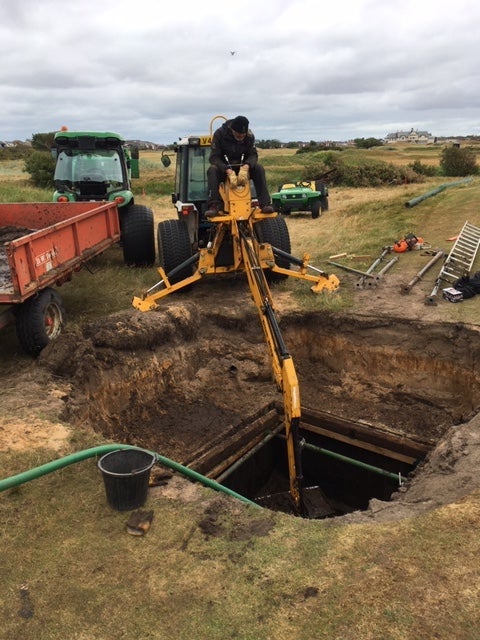
Regular aeration is critical for the management of turf playing surfaces and particularly in assisting in the movement of water. Regular aeration keeps turf surfaces open and receptive to rainfall or irrigation, enabling this to move uniformly and rapidly off the surface and into the soil or rootzone profile. Regular aeration will also speed the rate of movement of water through profiles into pipe drains or gravel carpet/aggregate drainage layers if these are present within the construction.
Appropriate Species and Cultivar Selection
The turf grass species present within a managed turf surface will directly influence how much water is required to keep these turf surfaces in good condition. This subject is addressed in detail in the GC2030 Grass Selection Guide however it is important to be aware of the influence that grass species and even cultivar types employed will have on future water demands. Turfgrass breeders are developing grass cultivars better able to cope with likely future weather patterns including drought tolerance.
Appropriate Construction Materials
Rootzone and material selection is critical when developing new facilities or new areas within an existing facility. Material selection could be for a new golf course, a new green or tee or indeed backfilling pipe drainage in a soil based green. It becomes critical to balance required infiltration and drainage along with water retention over the long-term. Maximising drainage will not always be the preferred outcome when considering that very free draining sands will also require significantly higher water inputs during dry spells of weather as compared to more balanced blends of soils and sand materials.