Opening Golf to the World
Irrigation System: Design
The performance and effectiveness of an irrigation system is dependent upon its design. A golf club will likely require a new irrigation system every 20-25 years. Decisions made at this stage can affect the long-term effectiveness and sustainability of the system. A poorly designed irrigation system cannot be made to function properly with remedial measures at a later date.
The performance and effectiveness of an irrigation system is dependent upon its design. A golf club will likely require a new irrigation system every 20-25 years. Decisions made at this stage can affect the long-term effectiveness and sustainability of the system. A poorly designed irrigation system cannot be made to function properly with remedial measures at a later date.
Irrigation System Upgrade/Replacement
There are many factors which will determine the replacement criteria of an irrigation system and its individual components.
- Quality and standard of individual components used
- Quality and standard of installation/installer. Components should be installed to the manufacturer's recommendations
- Regularity of maintenance and servicing of the system and its individual components throughout its lifetime
- Quality of raw materials, i.e. water and electricity supplies, and the influence this will have on individual components
Any new irrigation system being installed should be monitored and inspected by experienced personnel to ensure that the design and specification are correctly adhered to. Irrigation equipment manufacturers should also be consulted to provide guidance and training on the servicing and maintenance requirements of their products.
The process of irrigation design involves making decisions on three key criteria:
- Precise areas to be irrigated
- Application quantities required (mm per day/week) to ensure optimal turf quality
- Desirable irrigation time window (within any 24-hour period)
Sprinkler Uniformity
Sprinkler uniformity is the cornerstone of irrigation efficiency and is, therefore, a key part of irrigation design. Factors that affect sprinkler uniformity include:
- sprinkler operating pressure
- sprinkler nozzle and flow rate
- sprinkler rotation speed
- sprinkler spacing
- sprinkler configuration i.e. square, triangular or rectangular
- intensity of wind
- angle of setting
- unnecessary submergence of head
- Coefficient of uniformity (CU) - compares the average difference in each catch can to the mean, the closer to 100% the better.
- Distribution uniformity (DU) - how uniformly water is applied to an area. Expressed as a ratio. Values above 0.85 are considered good.
- Scheduling coefficient (SC) - how much extra the irrigation system must be run to ensure all areas receive sufficient water. Expressed as a ratio.
Generally, uniformity values should be above 85% or 0.85. The scheduling coefficient does not measure an average, but is a direct indication of the dryness of the driest 'critical' areas and it plays a direct role in establishing irrigation run times. The scheduling coefficient indicates the amount of extra water needed to adequately irrigate the 'critical' area and it is, therefore, imperative that sprinklers and their spacing, as far as is reasonably possible, are selected to have the lowest scheduling coefficient, i.e. a numerical figure closest to 1.0.
Technological developments that have improved uniformity include sprinklers with distribution profiles that achieve higher distribution uniformity (DU) values and nozzle designs that reduce wind distortion.
Pumping System
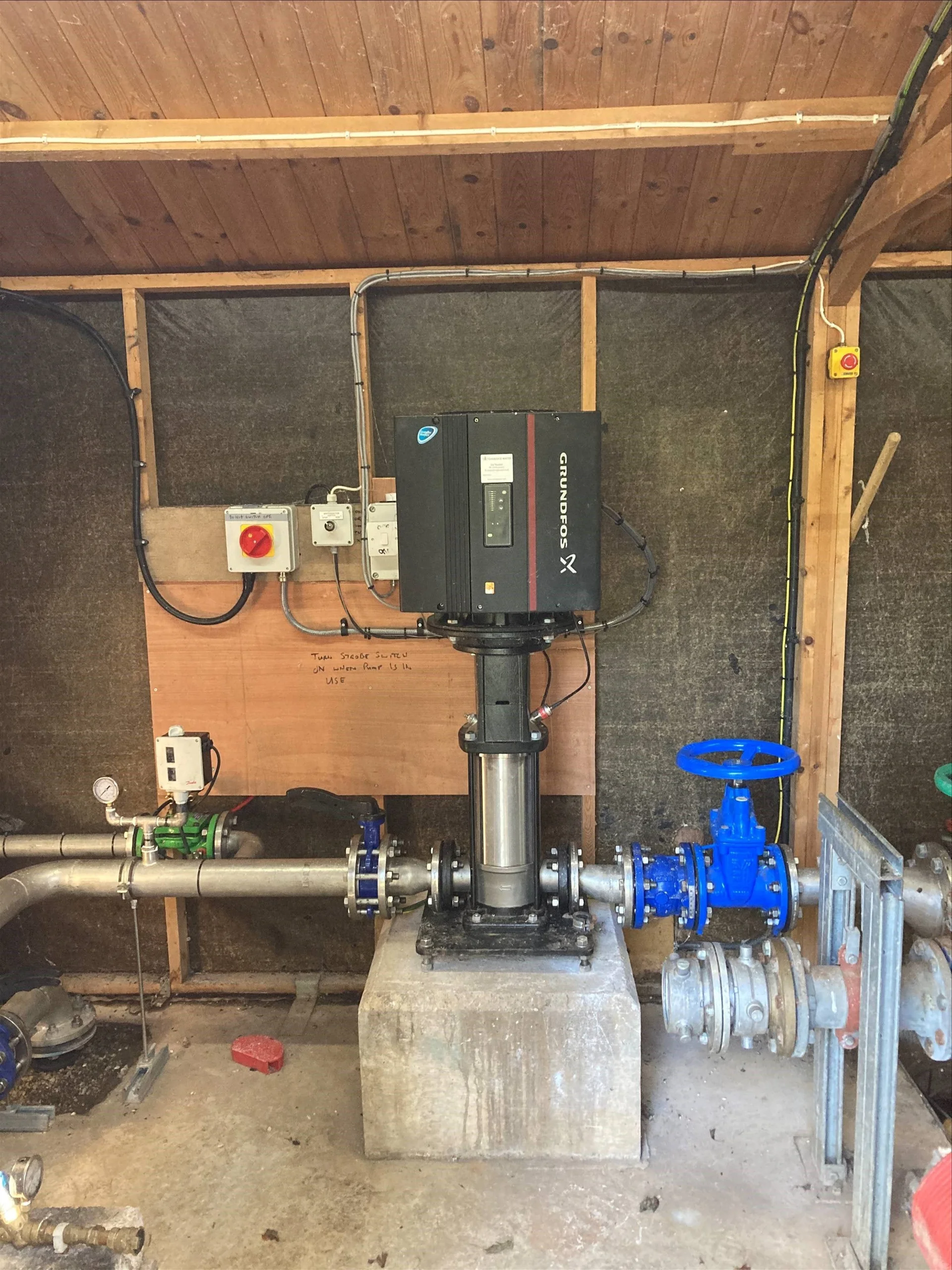
The pumping system for any golf course is the 'heart' of the irrigation system. It is also often the most expensive and technically advanced component of a golf course irrigation system.
The introduction of variable frequency drive (VFD) control technology over the last 20 years has allowed constant improvement in the configuration, components, and the control of pump stations. Irrigation pump station output can be accurately matched to the hydraulic demand in the field and this results in a reduction in energy use and pump wear and tear.
Pipe work
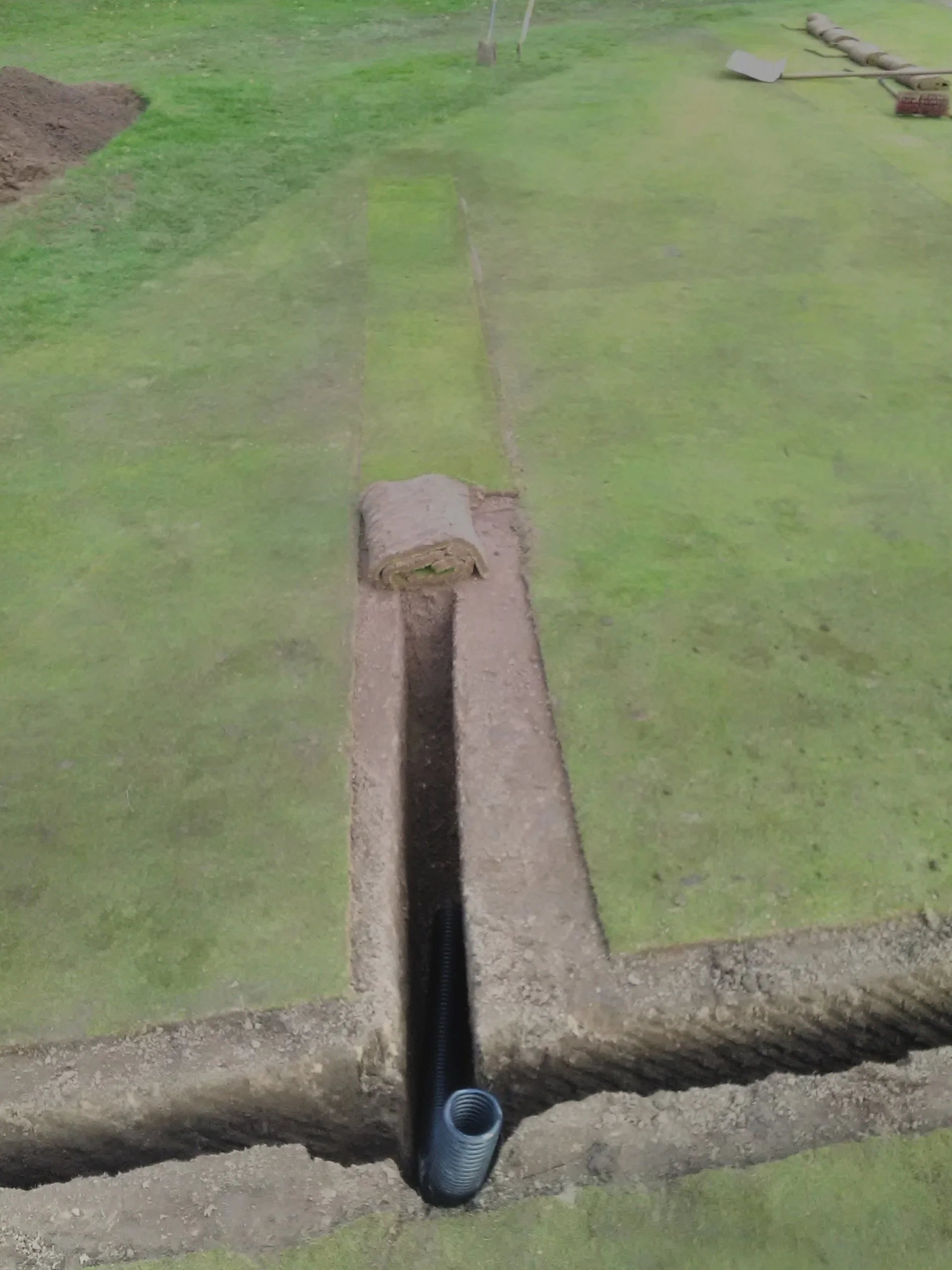
Pipe work is a significant component of an irrigation system as it is this network which delivers the water to the turfgrass. The most common type of pipe work used in current irrigation system design is polyethylene (PE) which must conform to BS/EN1220, or approved equivalent.
It is imperative that the correct specification of pipe work is chosen for the hydraulic design, system operating pressures and climate where it is to be installed as ambient water temperatures have an impact upon longevity of polyethylene pipe work.
Sprinklers and Valves
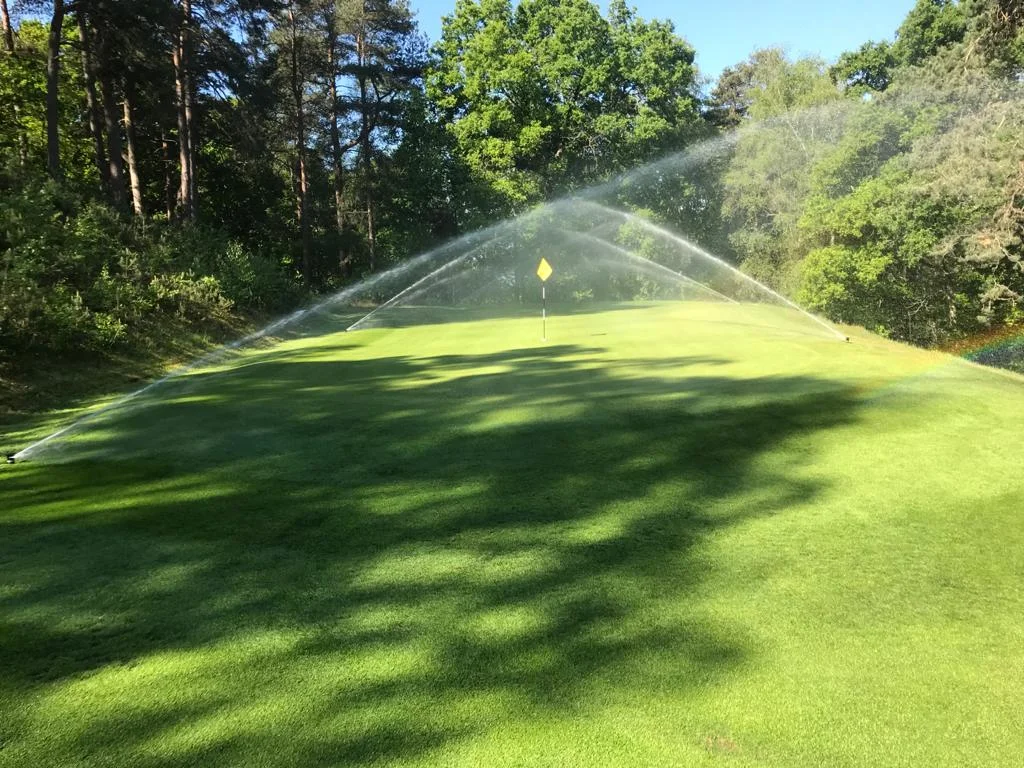
Sprinkler categories include rotors and sprays and within each category there are many different models. Therefore, an understanding of which products are suited to different scenarios is key.
Solenoid valves are used to control and regulate the flow of water in a pipe prior to sprinkler operation. Proper regulation ensures water is applied efficiently. Therefore, correct pressure regulation at individual sprinkler or solenoid valve level is imperative.
Individual valve-in-head sprinklers to irrigate specific areas without overthrow and waste of water onto unwanted areas should be used. Whilst this may increase initial capital cost, i.e. more sprinklers may be required, it will ensure a sustainable use of water, minimising water and power usage in the long-term.
Sprinkler nozzle development is a continuously ongoing programme of research and development by irrigation manufacturers. Uniformity and distribution of water and nozzle resilience are key qualities that need to be considered when selecting nozzles.
Isolation valves allow the shutdown of sprinklers covering defined areas of the course for servicing and maintenance, without having a detrimental effect on the overall operation of the system. Therefore, it is key that sufficient isolation valves are specified and installed as part of a design.
Central Control System
The central control system is pivotal as this controls how irrigation is scheduled on the golf course. Irrigation controllers and central control systems continue to develop in terms of flexibility, programming capacity, output function and communication capability and thus can be upgraded on a more regular basis than other parts of the irrigation system.
- Cycle and soak to ensure effective water penetration
- Pump station monitoring and the ability to react to pump or station failure
- Scheduling in millimeters rather than time
- Station/sprinkler run times to the nearest second rather than minutes
- Intelligent communication between the central controller and the solenoids/sprinklers to assist with fault finding and thus water use efficiency
- Chemical dosing such as fertilisers, wetting agents and acids for balancing pH levels.
- For multiple site systems, global programming allows quick and efficient shut down.