Opening Golf to the World
Rules of Golf
New and Updated Model Local Rules for 2026

14 Jan 26
5 mins
The next edition of the Rules of Golf will be published on 1 January 2028 but The R&A and USGA, the governing bodies for the Rules of Golf, have made a number of new and amended Local Rules available to committees to use from 1 January 2026.
These are part of the governing bodies’ quarterly updates to the Additional Clarifications of the Rules of Golf which can be found via the following link: It is important to note that the January 2026 additions published by the Governing Bodies are Local Rules and are not changes to the Rules of Golf. That means these Model Local Rules (MLRs) only apply if the relevant Local Rule has been introduced by the Committee in charge of a particular competition. It is expected that many of these Local Rules will be used by the professional golf Tours around the world going forward. Some may also be used at elite level Championships and others will also be appropriate for club competitions. To be clear the Local Rule that extends embedded ball relief is only for use in competitions where there is live television coverage. The following provides guidance on what the new and amended Model Local Rules are and how they should be used.1. Internal Out of Bounds (Model Local Rule A-4)
Many golf clubs already use Model Local Rule A-4 to put an internal boundary in place between two holes. This Local Rule is commonly used to help protect the intended challenge of the hole (such as when there is a dogleg where players could shorten the hole by hitting down an adjacent fairway) and for safety reasons. However, there is often no need to retain that restriction once the player has hit their tee shot. For that reason, a new option has been added to this Model Local Rule which allows the committee to put an internal boundary in place that applies only to strokes to be made from the teeing area. A committee still has the option of having an internal out of bounds apply to all strokes to be made on the hole.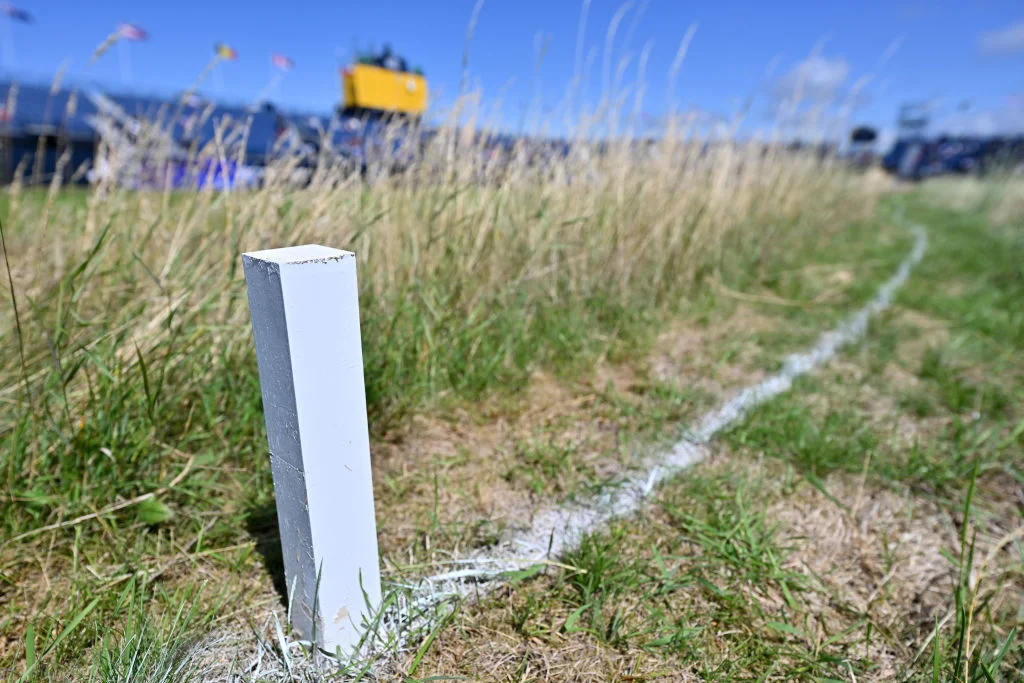
2. Limited Relief for Embedded Ball (Model Local Rule F-2)
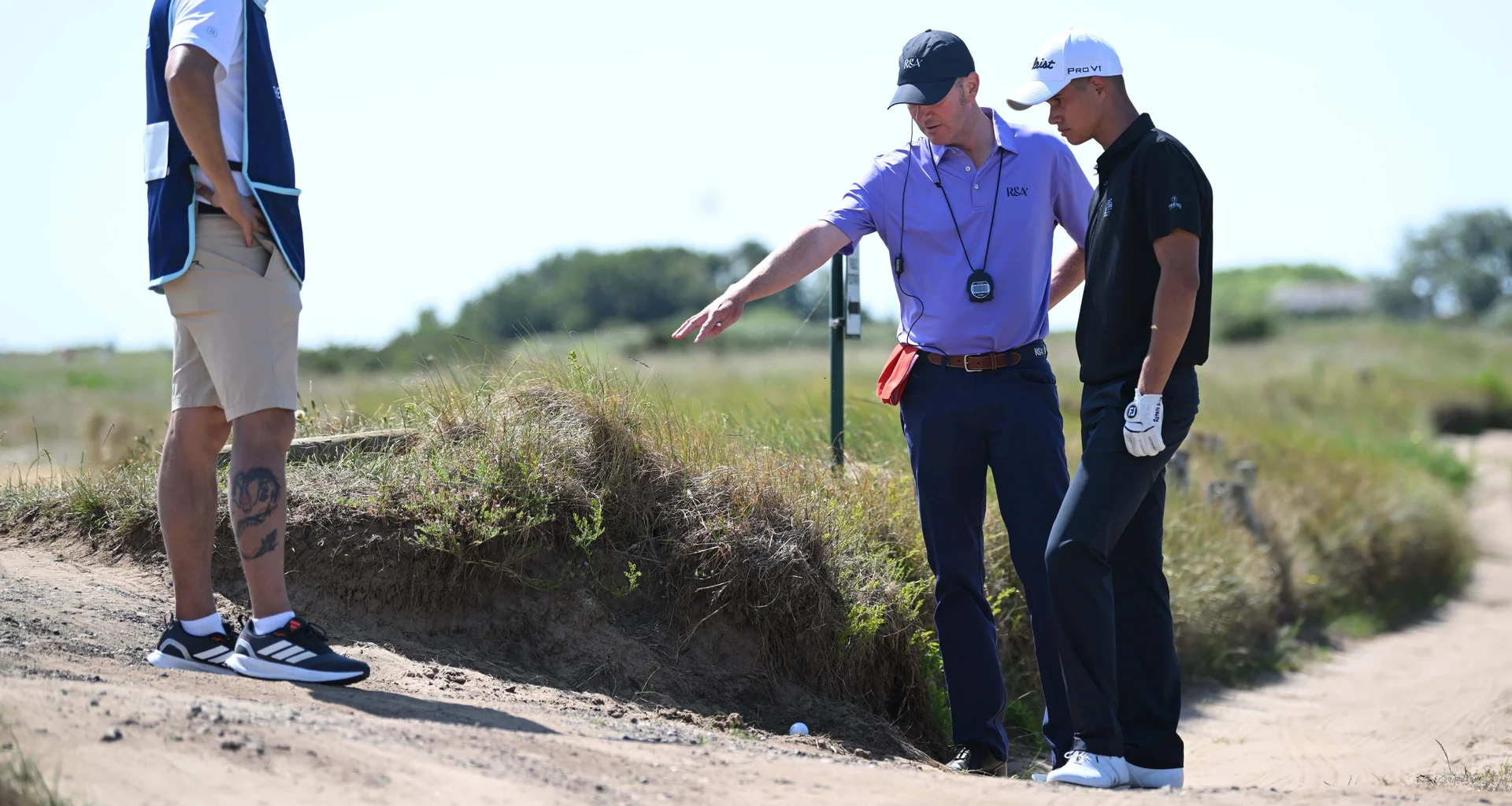
Generally, under the Rules of Golf, a player is only entitled to free relief when their ball is embedded in a pitch-mark that has been created as a result of their own stroke (see Rule 16.3b). A new Model Local Rule option has been added to MLR F-2 which allows a player to take free relief under Rule 16.3b when a referee determines that the player’s ball is below the level of the ground in any pitch mark created by another player’s ball that has not been repaired. This Local Rule option is only for use in competitions where there is live television coverage and where there are referees present to make this determination.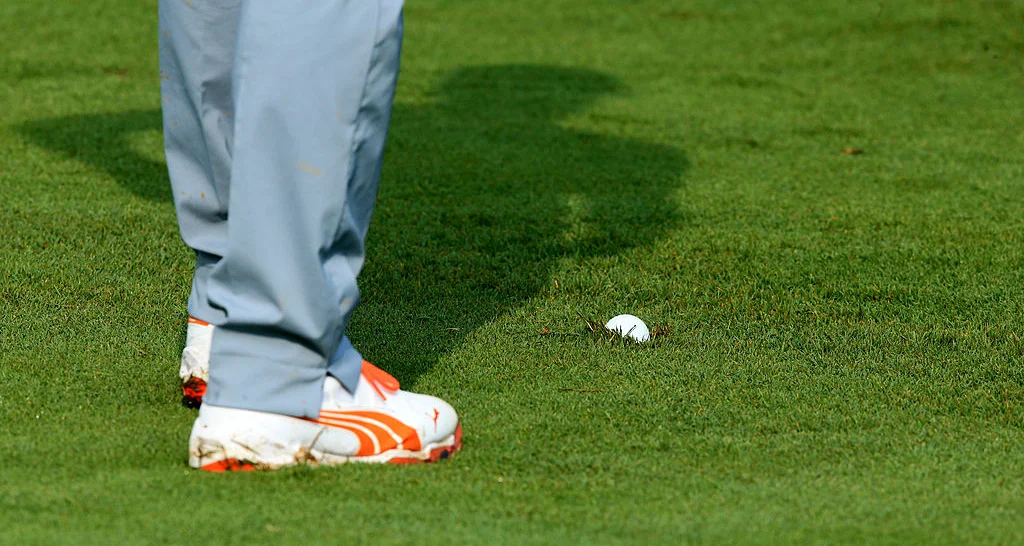
3. Player Has Not Played from Wrong Place When Unaware Ball Might Have Moved (Model Local Rule E-14)
Model Local Rule E-14 is a new Local Rule that has been added to address situations where a player is completely unaware they might have caused their ball to move before making a stroke but TV coverage subsequently provides evidence that the player caused their ball to move. Normally, if a player causes their ball to move and fails to replace the ball back on its original spot before making their next stroke, they have played from a wrong place and get a penalty of two strokes. However, Model Local Rule E-14 changes that outcome by providing that a player who fails to replace their ball when they are completely unaware that they had caused it to move will not be treated as having played from a wrong place. The player will get only one penalty stroke for causing their ball to move under Rule 9.4b (unless an exception to Rule 9.4b applies). This MLR is only appropriate for live televised events where the video referee is unable to advise a player they have caused their ball to move before they make their next stroke or when such evidence only comes to light after the player has made their next stroke.4. Line of Play Relief for Obstructions Near Putting Greens (Model Local Rule F-5)
Many clubs and committees around the world use the Model Local Rule that allows line of play relief from immovable obstructions (such as sprinkler heads) when the ball is within two club-lengths of the obstruction and when the obstruction is within two club-lengths of the putting green. This is sometimes known as 2 + 2 line of play relief. The 2026 update gives committees the option to expand the use of this Local Rule to give ‘2+2 line of play relief’ from specific types of ground under repair. For example, some professional Tours define the holes made when a movable obstruction (such as a microphone) has been removed from the ground to be ground under repair. When this type of ground under repair is close to the putting green it can interfere with stokes to be played along the ground. The ability to expand the use of MLR F-5 to give 2+2 line of play relief from specific types of ground under repair will therefore provide a fair outcome in these limited circumstances.5. Prohibiting Use of Motorized Transportation (Model Local Rule G-6)
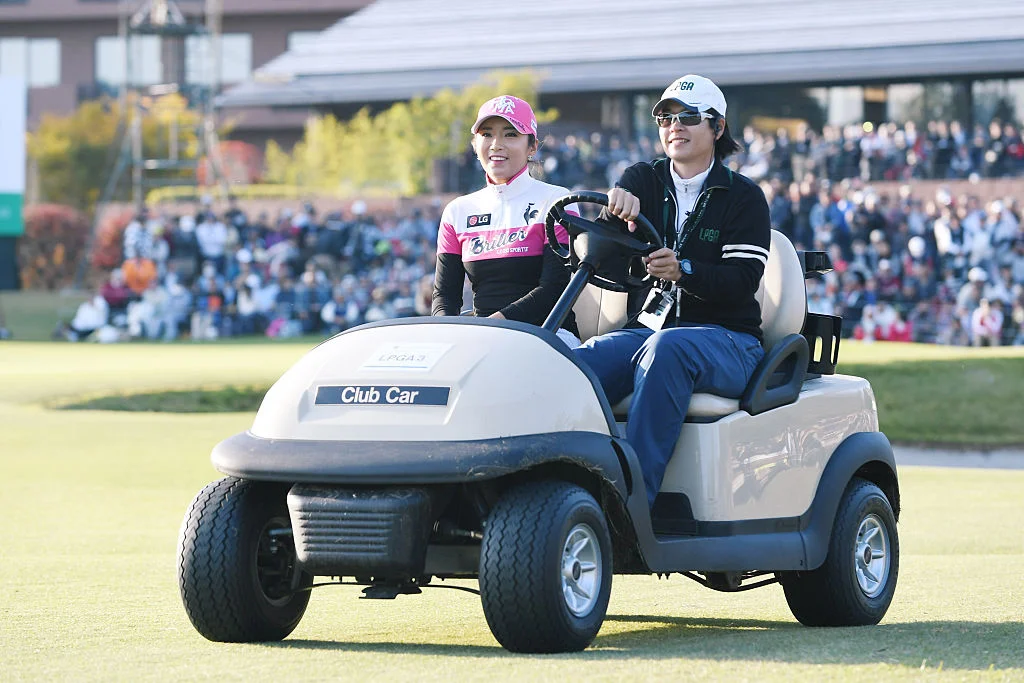
The Rules of Golf allow players to use motorized transportation such as golf carts by default. However, if a committee wants to prohibit players from using golf carts during a round they can do so by using Model Local Rule G-6. As part of this Local Rule, the committee can include exceptions to this, for example, to allow players to take organised cart rides between specified greens and tees when it would take a long time to walk between them. The purpose statement for Model Local Rule G-6 has been updated to clarify that a committee has the option to later approve a cart ride that was not organised but that a player mistakenly but reasonably accepted, such as when it was reasonable for the player to believe that the person who offered the ride was authorized to do so as part of the competition.