
Opening Golf to the World
Current Drainage Practices
Good drainage is probably the most important aspect of providing a well-maintained golf course.
Good drainage is probably the most important aspect of providing a well-maintained golf course. This is because it governs so many different variables from simple wear and turf health issues to allowing courses to remain open, even during periods of poor weather. Courses built upon sandy soils generally do not require much additional drainage, as water naturally drains straight through the ground without accumulating on the surface or causing turf damage. However, some sand-based courses do actually struggle with excess drainage, which requires more irrigation inputs. For courses built upon clay dominated soils, controlling the movement of water over and through the soil is key.
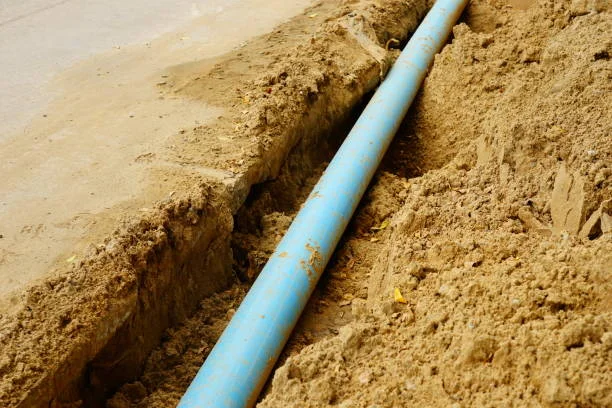
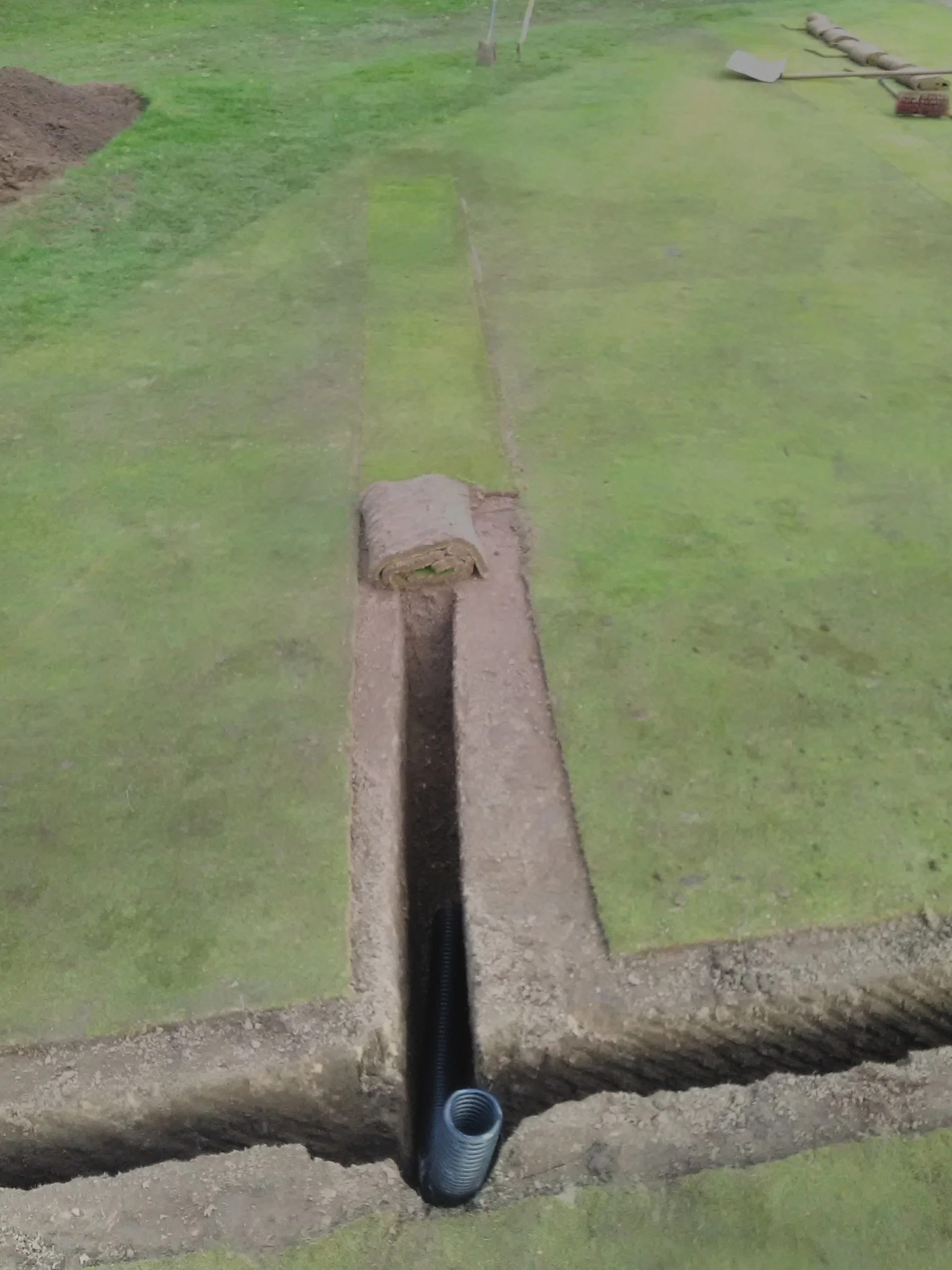
In the UK, this has traditionally been achieved through a network of subsurface pipes set within a narrow trench and back-filled with shingle topped up with sand or rootzone. Pipes are typically set 5m apart and less on greens although spacing will often be determined by cost/budget rather than need. For particularly wet areas, the piped network can be supplemented with sand grooves or slits which run perpendicular to the pipework and are set at much tighter spacings of 1m or less. This secondary drainage can generate significant benefits but is also significantly more expensive so tends to be used sparingly. Frequent maintenance is also required of these systems in order to ensure they continue to operate successfully after installation. In extreme circumstances, all the playing surfaces can be sand-capped. Due to the cost, this is most often found only on greens surfaces.
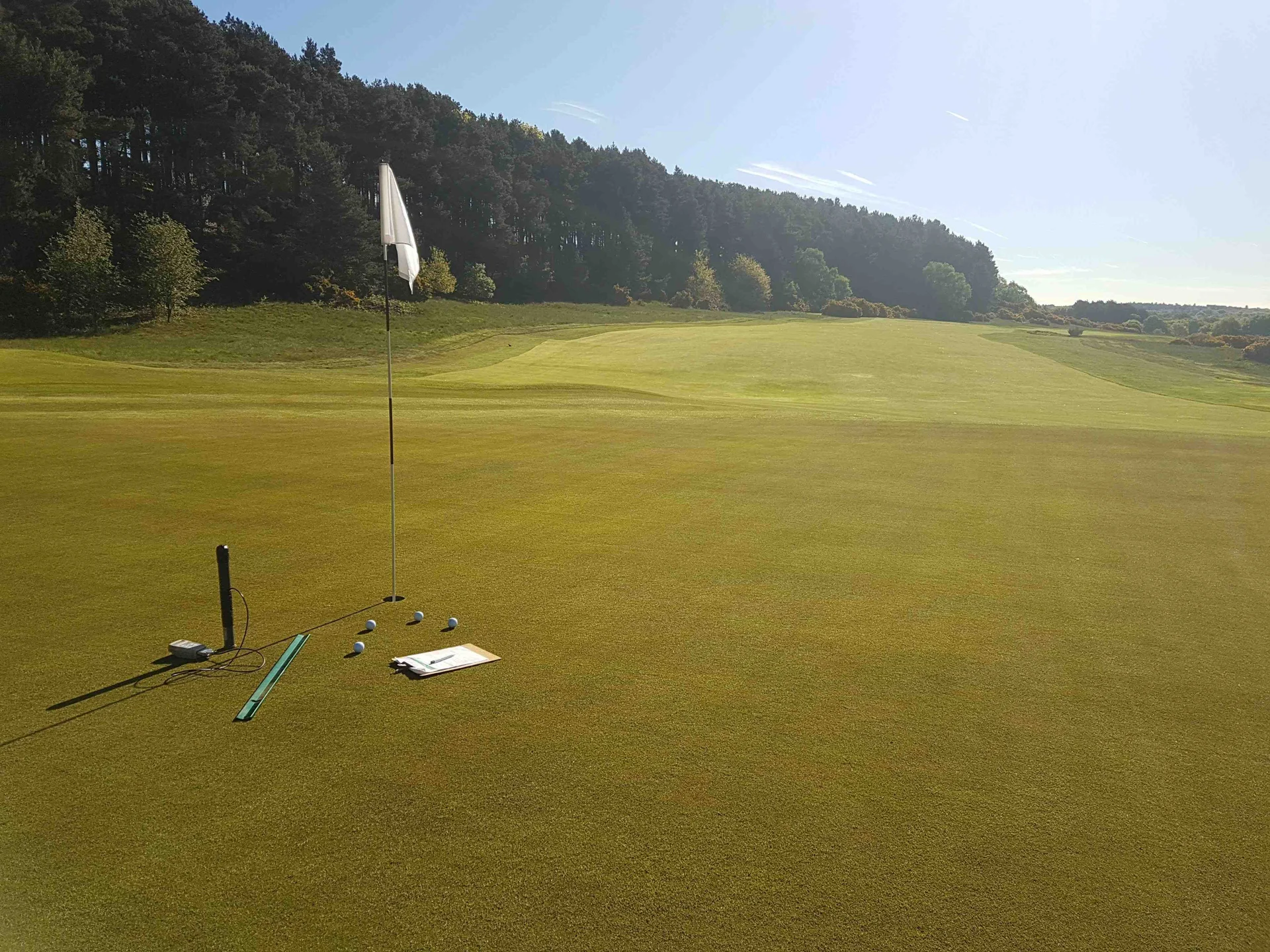
Alternatives to traditional piped drainage methods involve substituting pipework and gravel medium for porous drainage line products which allow horizontal and vertical movement of water through them. Another drainage method often used on greens is Passive Capillary Drainage (PCD). Often referred to as rope drainage, PCD is a stainless-steel core mesh wrapped in fibreglass which draws water in through capillary action. It is typically laid at 1m spacings and is a good option for retro-fitting non-USGA greens because it is quick to install and involves limited surface disturbance and materials.
On new golf courses, drainage tends to be installed during construction, although effort must be made to ensure that drainage is not cut due to cost constraints. However, on many older courses, drainage was never really a consideration or original drainage has long since failed. Drainage tends to be added over the years as and where it's required. There is rarely any long-term planning involved, which can lead to disjointed and unconnected systems. This can result in sub-optimal performance, and opportunities for holistic water management missed.
One of the main considerations when it comes to drainage is the outfall. Historically, this is often directed to the nearest water course or feature. However, this approach comes with planning and legislation issues in terms of downstream flooding and water quality. This approach is no longer seen as acceptable. With an integrated water management plan, water should be seen as a valuable resource throughout and designed based around attenuation, infiltration, and reuse of water as much as possible.
GC2030 Survey Question: In the last 12 months how many days play have been disrupted due to significant hole closures?
<10 days = 40.8 %
10 - 30 days = 40.8 %
30 - 60 days = 13.3 %
60 - 90 days = 2.0 %
90 + days = 3.1 %