Opening Golf to the World
Local Storage Ponds
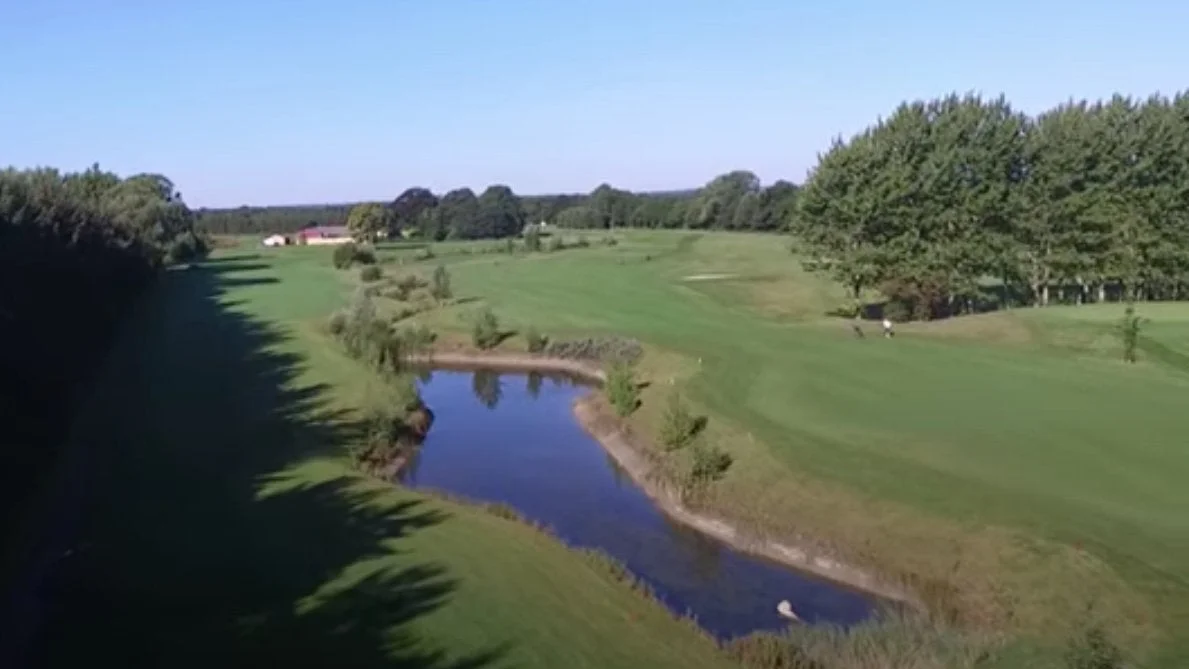
Ponds are permanent bodies of water that can provide attenuation of surface water run-off, storage of irrigation water, treatment of surface water run-off and, when incorporated within a golf course, a water hazard
Ponds are permanent bodies of water that can provide attenuation of surface water run-off, storage of irrigation water, treatment of surface water run-off and, when incorporated within a golf course, a water hazard. Ponds are also often key habitats on a golf course and can help to increase biodiversity.
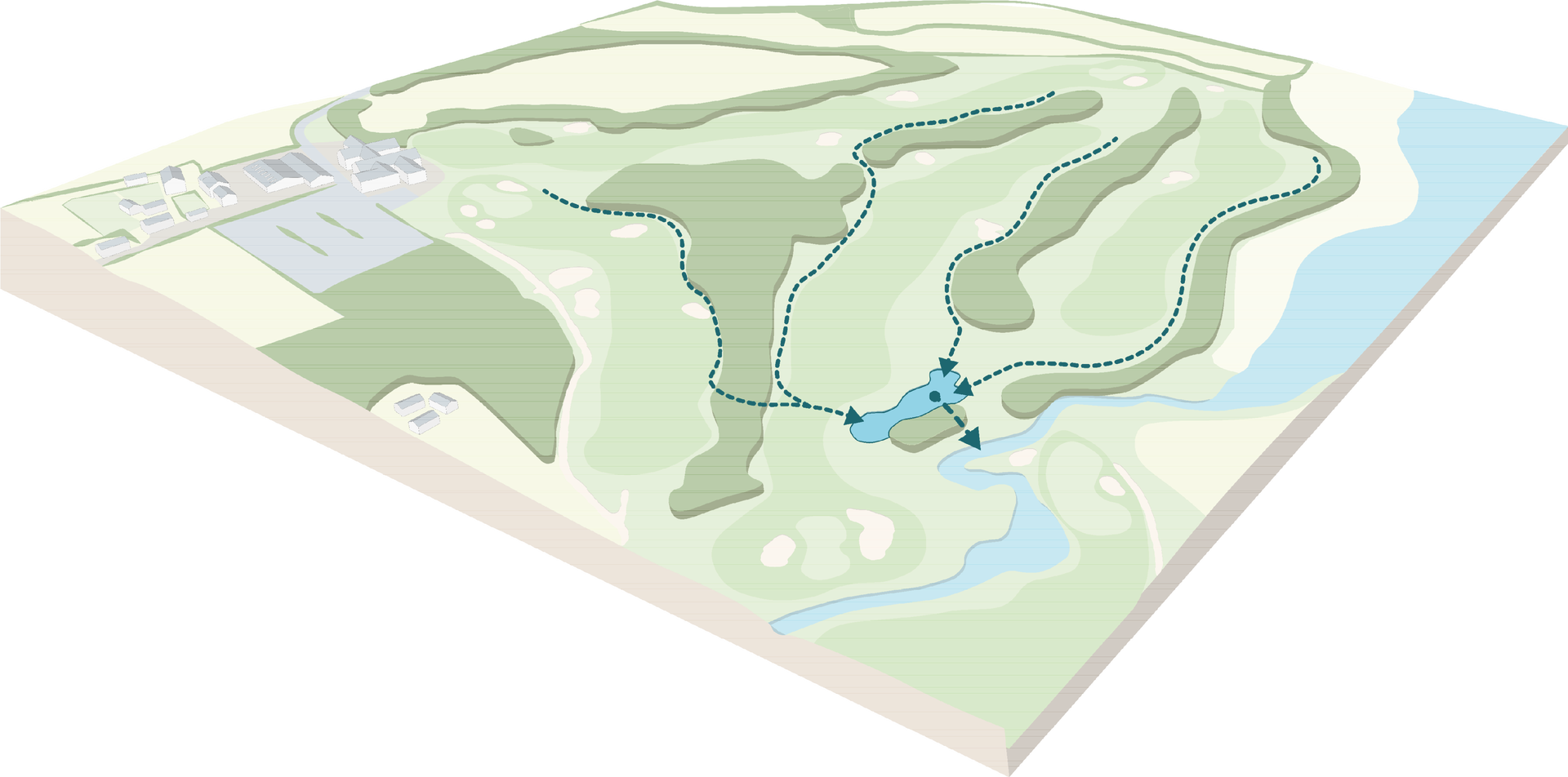
Ponds are usually situated at a point where upstream areas or springs drain into them. This may be via surface run-off or through a more conventional course drainage system. By collecting run-off from upstream, a pond will attenuate run-off thus reducing discharge downstream and reducing potential flood risk. This system requires additional capacity to be available in ponds during these events.
Ponds can also be used as an irrigation source, either by directly drawing from the pond or pumping water into a day tank. Treatment is required before being used in the irrigation system; most commonly filtration to remove particulates and, in some instances, UV treatment.
Course managers, engineers, ecologists and golf course architects should work together when designing ponds to maximise the attenuation, biodiversity and amenity benefits provided by these features. A full risk assessment should always be undertaken when designing a water feature which will have a permanent or seasonal body of water.
Key design criteria
- Easy egress routes for public safety
- Water circulation to prevent dead zones and stagnant water
- Minimum depth to prevent shallow, excessively warm bodies of water
- Additional aeration, if necessary
- Graduation or step into the pond not to exceed 450 mm
- Slopes not exceeding 1:3
- Periodically dry benches (shallow perimeter around edge of pond) approximately 500 mm wide to provide access and a drawn down zone from which to remove water from without significantly altering the aesthetics of the pond
- Ratio of flow path to length should not be shorter than 3:1 (ideally 4:1 or 5:1)
- Designed to the Reservoir Act 1975, even if it does not reach the threshold of 10,000 m3.
- Should not exceed 10,000 m3 (at this point they are classed as reservoirs – currently listed as 25,000 m3 but this is expected to change in 2021)
- Use of an impermeable base or liner if soils are not impermeable
- An exceedance flow route should be situated above the design water storage level. This can be an overflow pipe, spillway or weir. The intended discharge route of water should be assessed for suitability and should not put downstream structures at risk.
- Inlet and outlet pipework should be easily accessible and regularly maintained to prevent blockages or clogging
- Depth of the pond at normal water level with freeboard and during/after irrigation drawdown needs to be calculated. A drawdown limit needs to be set with a flow to maintain sufficient water levels.
- Removed water should be treated before use. Level of treatment is dependent on use and condition of water
- Preparation of a management plan to deal with sediment build up, biological issues such as algae blooms, inlet and outlet clearance and vegetation management
- Unwanted and overgrown vegetation around and in the pond should be removed as part of a management plan to maintain water quality and aesthetics. Ecological advice should be sought before major vegetation removal or alteration.
- Consider alternative uses of pond, i.e. fish breeding to assist with water cleanliness
- Should be surrounded with vegetation to improve bank stability
- Planning permission may be required if large-scale earthworks are required and natural flow pathways altered. Consideration needs to be given to flow off-site. National Water Body (EA, SEPA etc) restrictions may require a minimum outflow during specific times of the year.
Costs
Typical costs = £5,000-£50,000 (mainly excavation costs)
Typical size = 500-5,000 m3
Typical yearly yield = 2,000-8,000 m3 a year
Relevant Case Studies
Chorley Golf Club
China Fleet Country Club
Portmore Golf Park
Brondby Golf Club
Warrington Golf Club
Hollinwell Golf Club
Killiney Golf Club
Brokenhurst Manor Golf Club